Threadnody

Threnody (n): a song, poem, or musical piece composed as a formal lamentation or memorial for the dead

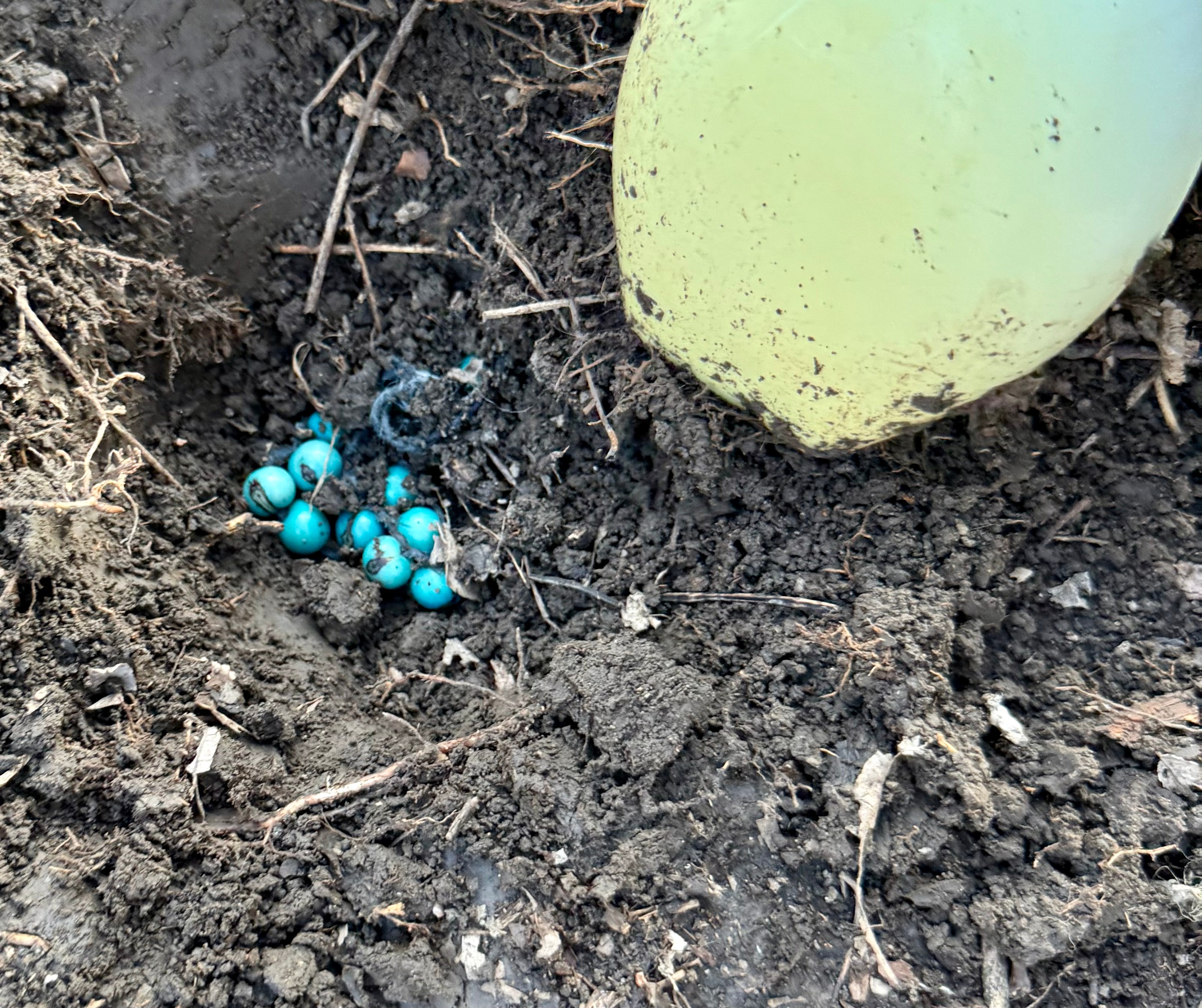
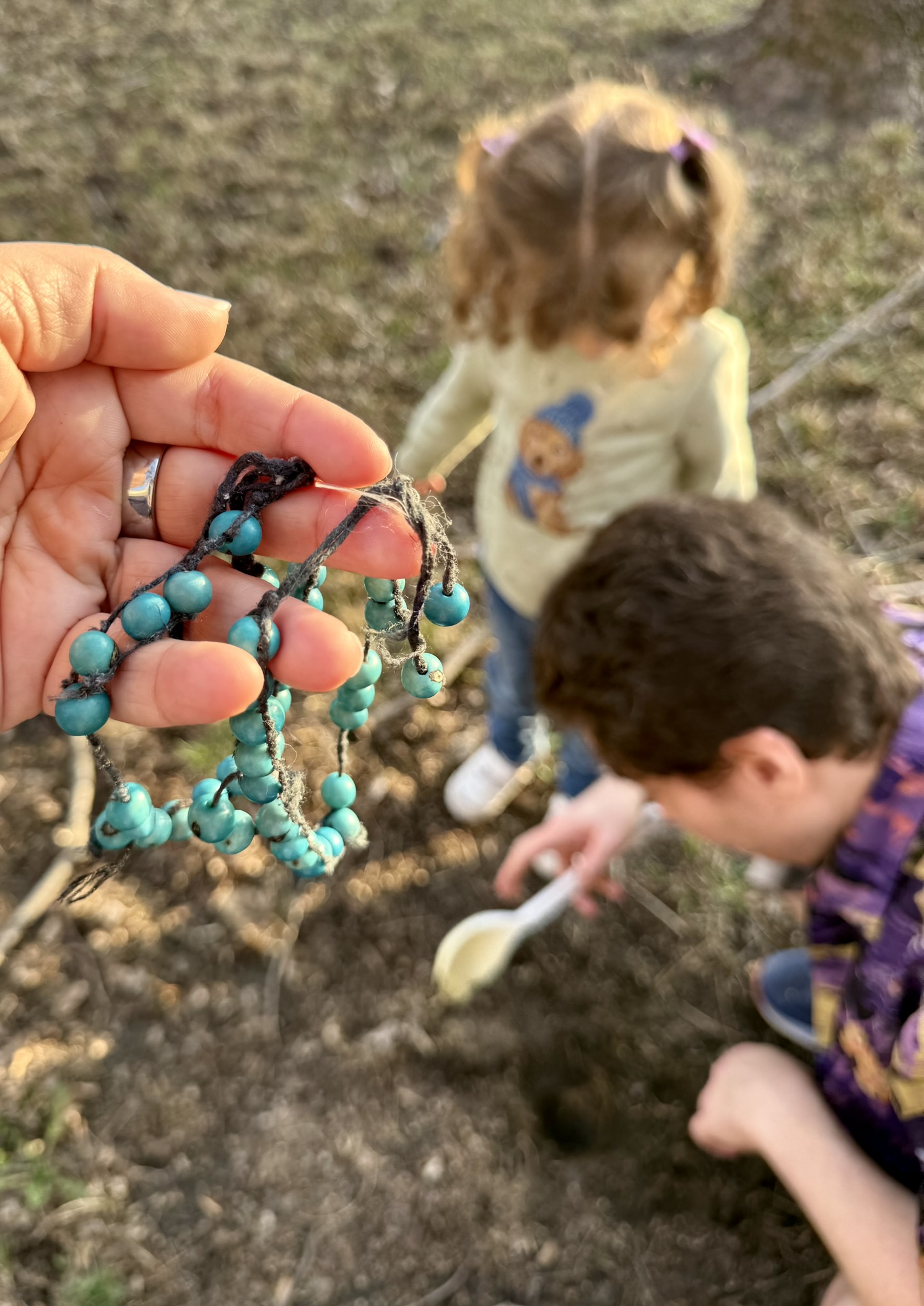
On Tuesday, Joseph, Ella and I buried this bracelet in the backyard. 
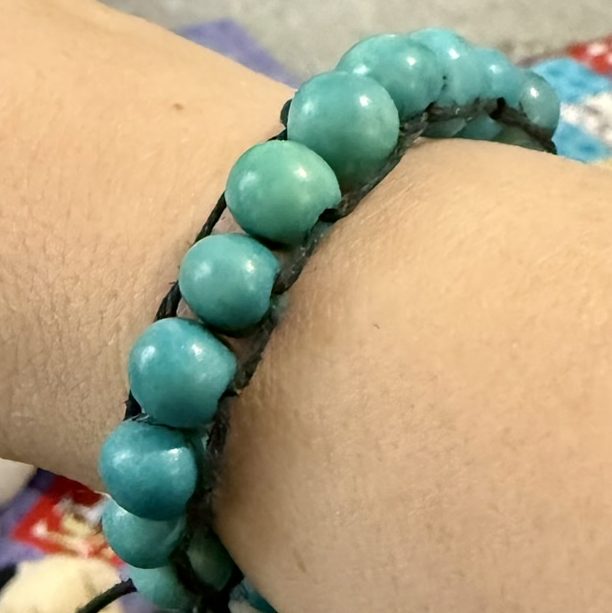
The bracelet had been with me for almost a year. On my wrist. In my backpack. My purse. It came with me to Kallah in Baltimore over the summer. It came with me to California for three visits and then a fourth when I officiated my grandfather’s funeral. It went to three different states when I officiated weddings in August, October, and January.

I bought the bracelet not long after we lost our last embryo on March 10, 2025. With that embryo, we also lost our last chance to become biological parents to a second child. I was still carrying the weight of the two pregnancies we lost before our miracle Ella, as well as the two losses that followed her. Even as I delighted in Ella every day, I grieved for the future I envisioned for us as a family of four. At the same time, my parents were preparing for their move to Florida. Realizing they are aging, I grieved anew that it took us so long to have a child and that we live too far away for frequent visits. I grieved for the time we lost and the time we won’t have. I grieved the end of my childhood, young adulthood, and the vision I’d had for my future. 

I had trouble speaking about this litany of grief because I also have so much to be grateful for. I know that grief does not undermine gratitude – it actually expands our capacity for it.  But it was still hard for me to name this weight, padlocks dangling heavy on the gates of my heart. 

If anyone else had come to me with this problem, I would have designed a ritual for them, some way to externalize the feeling, acknowledge and validate it. I would have invited them into ritual to honor the memory of what had been lost, and to support their steps into the future. But as our sages taught, in a famous Talmud passage, “A prisoner cannot free themself from prison.” In the story, Rabbi Yohanan, who had the power to heal others from sickness, could not heal himself. He needed a friend to help, and so did I (Talmud Bavli, Brachot 5). It was Reb Irwin who suggested a bracelet made of biodegradable materials. Something that I could keep for a year and then bury. I’d made similar suggestions to others coping with miscarriages – carry a rock for a week, a month, or as long as you carried the pregnancy, and then bury it. In the absence of a body, a casket, or a funeral, it’s helpful to hold a physical item, return it to the earth, and say goodbye. The loss of this embryo seemed to carry all the previous losses inside of it, a set of faceless Russian nesting dolls. With all of those layers, it felt like a year was the right amount of time to carry the bracelet. 

The bracelet I selected was made of turquoise acai seeds and black cotton thread. When it arrived, I counted 22 beads. One for each letter of the Hebrew alphabet. In Jewish tradition, 22 is a number that represents creation and completion. The mystics teach that these letters were the building blocks of the universe. In Bereishit, God created 22 things within the six days of creation, and rested when the work was complete. And in gematria, Hebrew numerology, the number 22 = יחד yachad, which means “together.” 

Despite my intent to wear it daily (and the mystical meaning I was rapidly assigning to acai seeds on a string), the bracelet itself was not the sturdiest. The woven structure fell apart within two weeks. I bought a second one. After all, if I wanted this item to stay with me for the duration of a year, I needed something durable, something that could hold itself together. The second one fell apart as quickly as the first, and I found myself asking my friend Bekah to help me stitch the beads back in line at ALEPH’s Kallah over the summer. Bekah is a Kohenet, artist and ritual guide; I told her why the bracelet was important to me, and asked for suggestions. How could I keep it from falling apart? 

I spent a lot of time rethreading the beads in the art room during breaks at Kallah. I tied and retied them, but no matter how I tried, I couldn’t get the beads to line up as they had before. Bekah noticed, and she reflected my behavior back to me – my singular focus on stringing the beads in a specific way. And I realized that for years, I had been trying to build my life the same way. No matter how hard I try, I just can’t control the future. I can pick the colors, string the beads, line everything up, create something beautiful – but sometimes, the thread breaks, the colors fade, the last embryo fails to attach. Sometimes, I am left with something less than what I’d envisioned, and more beautiful in its authenticity. I am left with the life I have, and the best thing I can do is wrap it around my wrist, and wear it with love. 

I kept both of the broken bracelets, carried them through my own wilderness, like the broken Tablets of the Covenant the Israelites carried, along with the whole ones, in their traveling sanctuary (Talmud Bavli, Bava Batra 14b). I kept one bracelet within my eyesight in my office, and kept the other in my backpack or purse. These artifacts of my grief made the losses visible, even if they were only visible to me. 

This past Tuesday was March 10, 2026. One year had passed since the day we learned about our last embryo. It was time for burial. Since I had two bracelets, I decided to keep one as a reminder of what I learned in the art room at Kallah. I brought the other out to the yard behind the house we’ve been renting in Urbana for the last four years. I moved into this house mid-miscarriage, and it’s the house we brought Ella home to when she was born. It’s the last home we ever shared with Gulliver. 

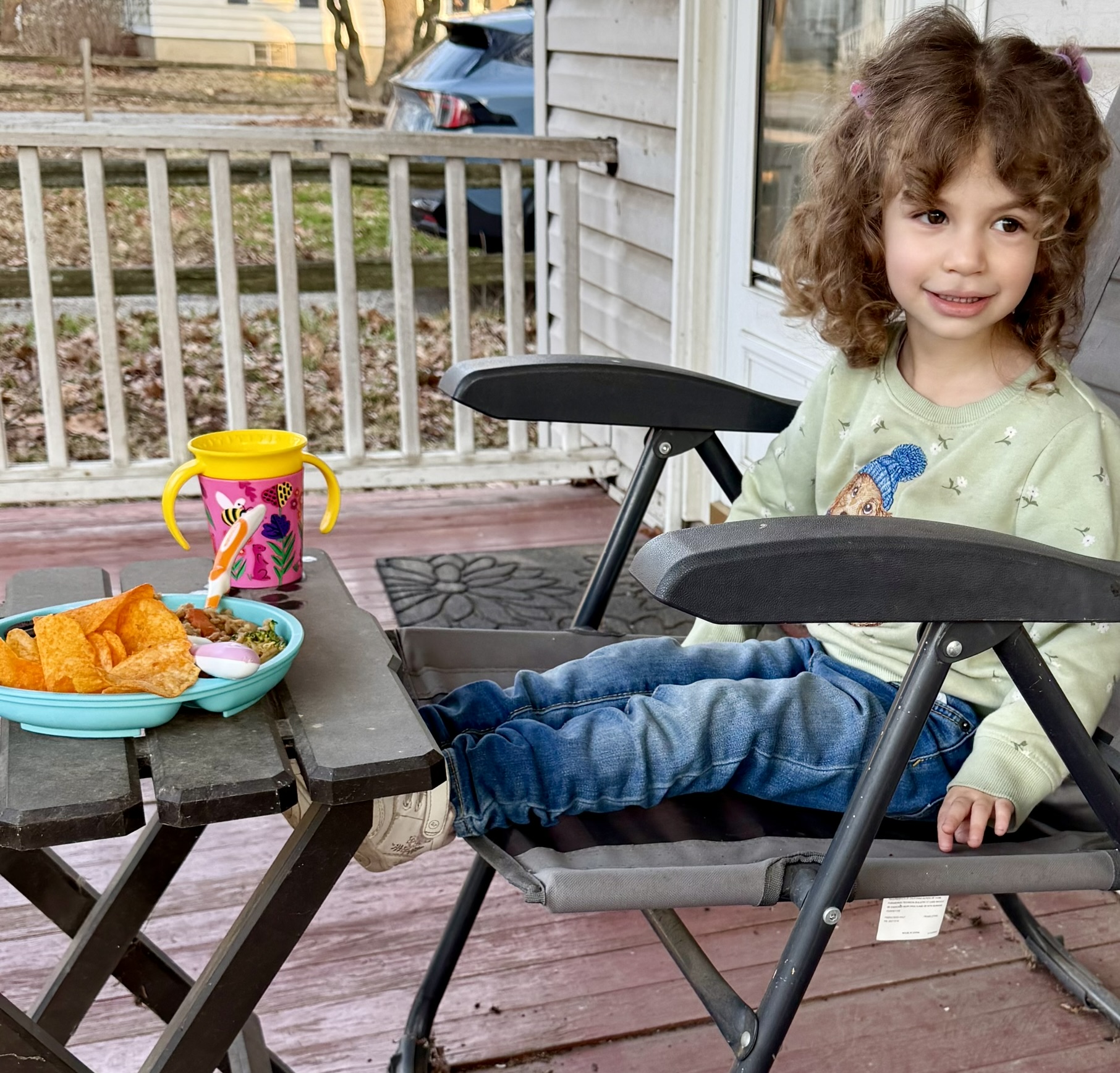
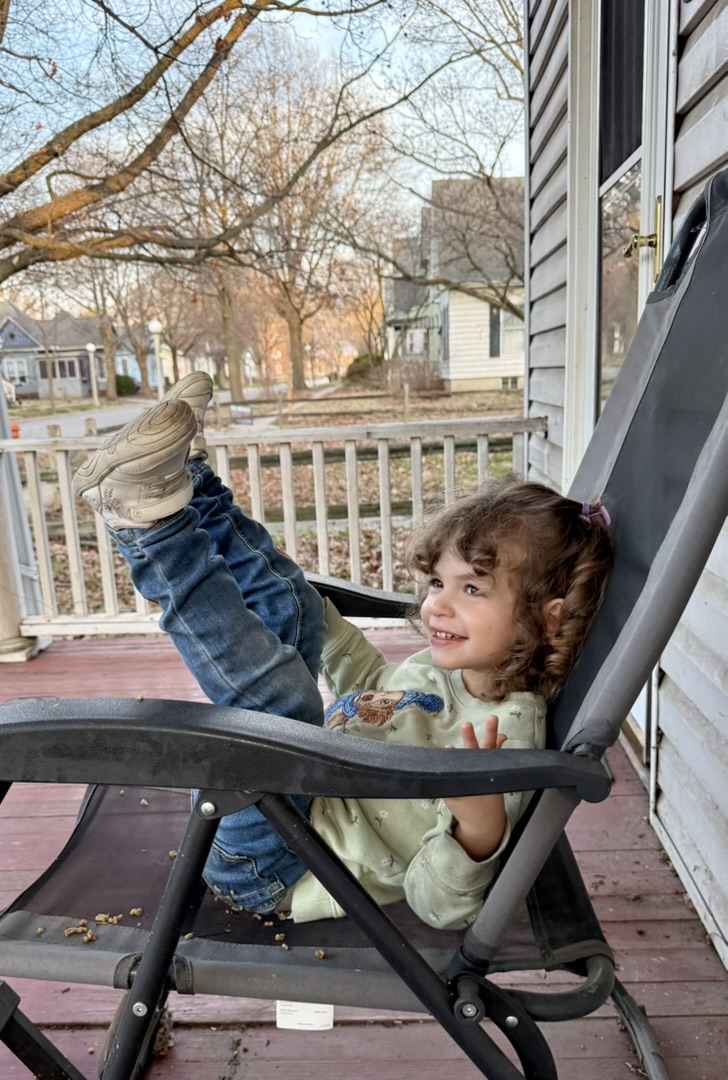
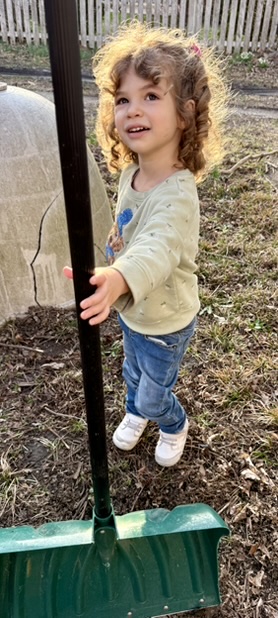
It was a beautiful spring day. Ella was wearing her favorite sweatshirt, the one my mom made for her with a dog embroidered on the front. We didn’t have a gardening trowel, but the earth was soft enough that we could dig a small hole with a snow shovel and soup ladle. “Today we are outside in the yard!” Ella chattered, telling us about the trees, the grass, and the wildflowers. She was excited to help us dig, “like a doggie!” I didn’t feel the need to say a blessing of any kind, or to name out loud what we were doing and why. It was beautiful to just be yachad – together – returning these 22 seeds to the earth. Ella asked if we could eat dinner outside afterward, so we sat together on the porch, enjoying the evening. 

One year after a traditional burial, Jews do an unveiling ceremony. The headstone is covered until that time, and at a ceremony around the one year anniversary, the veil is lifted. This was a different kind of loss, and I was burying, not unveiling. But something lifted for me that night as we sat on the porch together after burying the bracelet. For a few moments, there were no veils separating the life I am living from the life I had envisioned. I tied my daughter’s laughter with string, wrapped it twice around my heart, and I knew, in that moment, that we are everything we need. 
Ritual for Moving into a New Home

Ritual Items

  • Slips of paper
  • Pens/pencils
  • Mezuzah (optional – you can do the rest of the ritual without a mezuzah if you don’t have one).
  • Jar or basket

This ritual should be done right outside the front door to the home. 

Facilitator
Life is a series of comings and goings, entrances and exits. We stand here now outside the doorway of our new home. Throughout this coming year there will be thousands of leavings and returnings, but only this doorway marks the threshold between the world outside and the world of our hearts. 

The blessing inside the mezuzah, the V’ahavta, is a poem about love – You shall love the Source of Life with all your heart, with all your soul, with all your might. This commandment reminds us to enter and exit this home with love in our hearts.

Whatever we encounter on the other side of this door, we choose what comes inside with us, and what we leave on the doorstep. The love shared inside this home can be carried through the doorway as well, a reminder of what awaits us when we return. 

To honor this sacred moment, in addition to affixing the mezuzah, we will each write three kavanot – intentions – we’d like to bring to life in our new home. What might we create in this space together? How do we want to feel when we enter and when we exit? What does it mean to each of us when we say “I am coming home?” 

Take five minutes to write and reflect individually. 

Once everyone has finished, say: 

I invite you to share one or more of your blessings/hopes for our new home, and then add it to this jar/basket. We will keep the jar/basket at [a place in your home, perhaps a bookshelf in a central location]. 

Community shares. 

Facilitator:

Thank you, everyone. In the Jewish tradition, HaMakom, The Place, is one of the names of the Divine. May we make this place, our home, holy every day with (list things people offered as blessings), and with laughter, love, and growing. 

Affixing the Mezuzah (place scroll in case, recite blessing, then affix):

Traditional:
Blessed are You, God, ruler of the universe who has sanctified us with commandments and commanded us to affix the Mezuzah.

Barukh Atah, Adonay Eloheynu, melekh ha’olam asher kidshanu b’mitzvotav v’tzivanu likboa mezuzah.

Recommendation: If you’d like, you may also include “Blessing for a New Beginning” by John O’Donohue. 

Infertility Speaks

Many people have approached me over the years requesting spiritual support for their infertility and pregnancy losses. I am always willing to offer this support when I can. I am posting a collection of my Jewish liturgy and rituals relating to infertility and pregnancy loss here for accessibility – for anyone who needs them. I am also available to teach clergy and other Jewish communal professionals about ways to support those in their communities who are facing infertility. It can be challenging to find a place in the Jewish world without children. But those who are longing for children need Jewish community more than ever. I hope these are helpful. Please feel free to reach out if you have questions or would like to speak more.

Prayer Before Starting IVF

Water: A Prayer/Mikveh Ritual for after an IVF Miscarriage

Hearing in our Hearts: Hannah’s prayer

Infertility Speaks: An Imagined Support Group for Sarah, Rebecca, Rachel, and Hannah
This is a script for an imagined infertility support group for Sarah, Rebecca, Rachel, and Hannah. You might use it as an alternative or in addition to the Torah reading on Rosh Hashanah day 1 (when we read Sarah’s story), or the Haftarah reading on Rosh Hashanah day 2 (when we read Hannah’s story). Or you might use it to open up conversation about this very painful topic with your community when you encounter any of these women’s stories in the Torah. There are suggested debrief questions to share with your community at the end.

On Blessings: My Rabbinic Smicha Remarks

Presented at my rabbinic ordination ceremony on January 8, 2023

I became a mom on October 3, and today, I’m becoming a rabbi. “Mom” and “Rabbi” are two pretty big names to earn within three months. While my journey to motherhood included five years of infertility, pregnancy losses, and IVF, my journey to the rabbinate included five years of stumbling through Hebrew, wrestling with God, and finding my voice as a spiritual leader. I learned so much from both journeys. I can’t tell you which was harder. I can tell you that both have been worth it. 

I can also tell you that having ALEPH community to support me through both journeys has been a powerful blessing, especially when I felt most isolated and uncertain. I found out I was pregnant at my first Ohalah Shabbaton in 2018. Reb Marcia was reading “Blessing for A New Beginning,” by John O’Donohue, and I teared up thinking about the two new beginnings that were “quietly forming” for me: the beginning of my life as a parent, and the beginning of my rabbinical school journey. I miscarried a few months later. 

And since then, these two journeys have been deeply connected. At our last in-person Shabbaton in January 2020, ALEPH friends surrounded me with song and prayer in a private blessing circle for my IVF process. We recorded the songs, and my friends’ voices accompanied me to my doctor appointments. My daughter, Ella, who is watching from home with her daddy right now, came from an embryo transferred 10 days after the 2021 Ohalah Shabbaton. From January to January, from injections to hospital visits, from beginnings to blessings, we have been in it together.

For my ALEPH capstone, I put together a book of my original rituals and blessings. Many of the pieces were written in response to prompts from my teachers – holy homework assignments. And many of them are connected to my experience with infertility. A mikveh ritual for after an IVF miscarriage. A blessing for starting an IVF cycle, which I shared with ALEPH friends on Zoom the night before an egg retrieval. 

In moments of pain and in moments of joy, blessings remind us that the world is holy. The Baal Shem Tov taught, “God is garbed in everything! No place is devoid of the Divine.” We do not make something sacred by blessing it. Blessings help us elevate the holiness that already exists. If there was anything holy to be found on my IVF journey, my ALEPH community elevated that holiness through blessings of love, presence, and compassion. I am grateful for the blessing of my daughter, for the blessing of this smicha, and for the beautiful neshamot who blessed us along the way. 

As we take the next steps on our journeys, may we all be blessed with communities like the one I found here. May we be surrounded by people who remind us that holiness is pulsing through the universe, as close to us as our own heartbeats. And may we be blessed to be that blessing for others – elevating the Divine Sparks that shine around and within us, and reminding others, every day, that they are not alone. (Amen) 

Podcast Interview: Trans-Affirming Hebrew Name Change Ritual

In the Torah, names are powerful and signify moments of transformation. Our Jewish ancestors Avraham, Sarah, and Yisrael each received new names as part of their journeys.

As a child, Spencer Kaseff struggled with self-loathing. Assigned female at birth, but unsure of his gender identity, Spencer was deeply sensitive and spent a lot of time alone. But in December of 2019, Spencer left that part of his life behind during a Hebrew renaming ritual.

This episode is a conversation between Andy Anderson (they/them), Spencer Kaseff (he/him), and Heather Paul (she/her) about Spencer’s emotional renaming ritual that was performed at Hillel International’s Global Assembly in 2019.

“There’s a need for transgender Jews to receive new Hebrew names as much as new secular ones, but very few resources exist for transgender renaming rituals. According to a 2018 study in the Journal of Adolescent Health, calling a transgender person by the name they use to refer to themselves can reduce their chance of suicide by as much as 65%. In Judaism, we can take a step toward inclusion by honoring and celebrating the journeys of transgender Jews through Jewish renaming.” -Heather Paul

Want to watch the video or view a ritual template for your own use? Check it out on Ritualwell. Thanks to Andy for interviewing us – and thank you to Spencer…for everything ❤

Voice from the Void: 30 Scatteredleaves Creations from 2020

Sometimes words bang on the doors of me, begging to be let out. Is it a striving desperation to make meaning out of madness? To tame an untamable experience by shaping it with narrative?

Several weeks ago, my classmates and I encountered Rebbe Nahman’s texts about The Void – and the silence within it. For many of my classmates, facing that silence led to more silence. But for me, it just made the words louder. I write constantly. Sometimes the words rush from my fingers faster than I can type them, an unstoppable flood pouring from the rock Moshe hit with his stick, when he couldn’t find words himself. It seems the harder it is to find the words, the more the words find me.

Chaim Bialik writes, “It is that very eternal darkness that is so fearsome – that darkness from the time of Creation…Every man is afraid of it and every man is drawn to it. With our very lips we construct barriers, words upon words and systems upon systems, and place them in front of the darkness to conceal it; but then our nails immediately begin to dig at those barriers, in an attempt to open the smallest of windows, the tiniest of cracks, through which we may gaze for a single moment at that which is on the other side.”
Perhaps writing is one of my attempts to create a penimi from a maqqif (something I can grasp within that wish is ungraspable). A way to crack a hole in the darkness of the void. A way of finding God in a place that appears empty, so that I can chase the next void, and the one after that.

With that in mind, I share a list of things I created within the void of 2020 – rituals, poems, prayers, and videos. This is not a comprehensive list. I only included the creations I felt I could publish or name in this space or elsewhere. The list doesn’t include all of my school writing (one of my classes had weekly reflection assignments) and it doesn’t include every private ritual I created for people who needed them. It also doesn’t include the virtual programs I built. But it’s a start.

I’m grateful for all the words that found me in the emptiness, but I pray for a 2021 that is full – full of inspiration, full of healing, and full of hope. Blessings on your journey, beloveds. See you on the other side.

Published on Ritualwell:

  1. Prayer Before Starting IVF
  2. Postponement Prayer (also published in When the World Turned Inward, Vol. 2)
  3. Virtual Memory Circle
  4. Hearing in our Hearts
  5. God’s Lament: A Letter to Daughter Zion (from Reb Shulamit’s class)

Videos:

  1. What Have We Lost?
  2. History of Loneliness
  3. History of Languages
  4. Looking Behind: A Monologue from Lot’s Wife
  5. Light and Darkness

Published in the Forward:

  1. ‘In the Torah, name changes signify moments of transformation.’ In the lives of transgender Jews, they are just as powerful

On my blog

  1. Nahman’s Dancing Circle, Chayei Sarah, and Pixar’s Inside Out (reflection assignment for Reb Elliot’s class)
  2. Get In, Get Real, and Grow (reflection assignment for Reb Elliot’s class)
  3. Letter to Rebbe Nahman (reflection assignment for Reb Elliot’s class)
  4. Shelters (in Place): A Pandemic Sukkot
  5. Holding the Shattered Pieces
  6. Grief in the Book of Ruth: Ruth’s Letter to Mahlon (from Reb Shulamit’s class)
  7. Silent and Sacred: Parshat Shmini for 2020
  8. Letter from God to the Ones Who Struggle: A Reinterpretation of Song of Songs (from Reb Shulamit’s Class)
  9. Alone Together: Parshat Vayikra
  10. Where Are You?

Publishing in 2021, but written in 2020

  1. Letter from Vashti to the New Queen of Shushan (publication set for February, I hope) 
  2. Prayer for the Covid-19 Vaccine
  3. Havdalah for Letting Go 
  4. Mezuzah Ritual for Moving into a New Home

Papers for Biblical Civilizations class

  1. A Tale of Two Floods 
  2. “To Teach and Enlighten:” The Book of Joshua and the Book of Judges
  3. Three Contemporary Prophecies written in the style of the prophet, Ezekiel
  4. A Contemporary Apocalypse in the style of the Book of Daniel
  5. Bringing Biblical Life and History to Hillel