Strength and Song


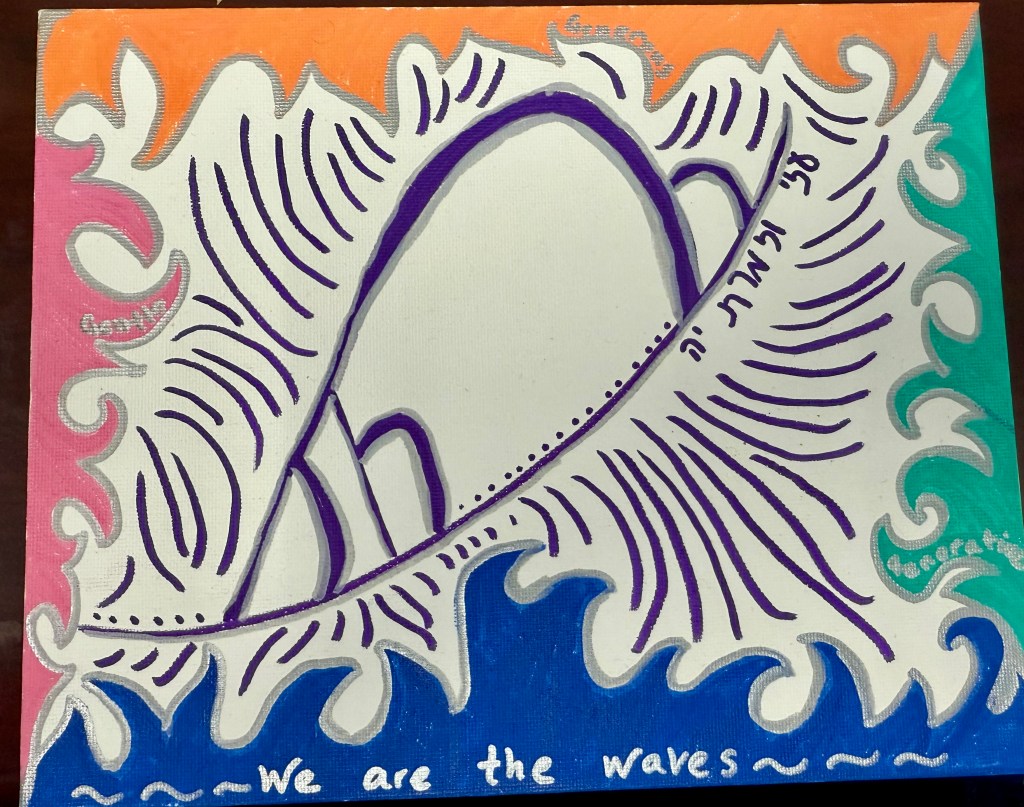
עָזִּי וְזִמְרָת יָ וַיְהִי לִי לִישׁוּעָה
Ozi v’zimrat Yah
Vayehi li lishua

My strength (Ozi) and God’s song (Zimrat Yah) will be my salvation.

This prayer-song was my anthem for my final embryo transfer. Offered to me as medicine from my soul sisters on the Sunday of the Ohalah Shabbaton in January, I listened to recordings of my beloved friends singing me this song as I drove to doctors appointments and before most of my injections.

Ozi v’zimrat Yah. My strength and God’s song. We never know how the song will unfold. When I surrender to its music and I focus on my own strength, the parts of my life – and the parts of IVF – that I can control, it helps ease my passage through the dissonance I encounter along the way.

IVF – really, all pregnancy and birth, but especially IVF – are part miracle, part medicine. My strength and God’s song. Hope and hormones. Prayer, practicing trust, and doing everything we possibly can to make it work.

We did everything we could to make our final embryo transfer work on February 27th. And still, on March 10th, we found out the embryo didn’t even attach this time. I was not pregnant.
I’m not pregnant.

For a long time I felt guilty about even wanting or praying for another child, and I felt guilty asking my friends for support while I was trying. I leaned on community so heavily in my journey to Ella. Part of me felt like “I already got my miracle. Who am I to ask for another?” But we had always wanted two. That was our intention. Before the first miscarriage. Before infertility. Before the endo diagnosis. Before IVF. We dreamed of being a family of four. I wasn’t willing to give up on that, not while I still had remaining embryos. Even after my challenging pregnancy and birth experience with Ella, I wanted her to have a sibling. And knowing that we only had XY embryos left – we were really excited about the possibility of a baby brother.

But we miscarried the embryo we transferred in September and this final embryo didn’t attach. And we won’t be doing further medical intervention. The time for egg retrievals is behind us. It costs a fortune. My egg quality wasn’t great during all those retrievals and it’s certainly not better now. My body reacts so badly to the progesterone injections that doing this again with a donor egg isn’t an option either. After this transfer, I battled another infection at one of my injection sites. It was cellulitis – the same thing that landed me in the hospital in 2021. I caught it early this time and got antibiotics as soon as I knew. I am glad I listened to my body and went to the doctor instead of waiting longer.

While I battled the infection, Gulliver, our beloved 13-year-old labradoodle, got very sick. In just five days, we went from thinking we might gain a family member – to facing the very real possibility of losing one. I didn’t have capacity to reflect on the embryo loss while we were deciding if we should put Gulliver through the operation. Would they operate and find cancer, discovering that he had no chance at survival anyhow? Would they remove the spleen and find a benign tumor, prolonging his until-now happy and healthy life? Once again, we were standing at the crossroads of medicine and miracles. Our strength and God’s song. A doctor we trusted and an outcome we couldn’t. Just enough information to tell us we had a choice, but not enough to know if we had a decent chance. How would the song unfold this time?

We are so relieved that our sweet boy is healthy after all. We know Gulliver is a senior dog and we aren’t in denial about that. But for now, he is cancer-free, which means that he and Ella can make more happy memories together in the time he has. They shared a piece of pizza on Saturday, and it felt sacred.

It has been over seven years since my first pregnancy, and over five years since we started pursuing IVF. Seven years of trial and error. An endometriosis diagnosis. Countless ultrasounds, blood tests, laparoscopies, injections, miscarriages, tears, and everything else. At the same time – rabbinical school, a cross-country move for a rabbinic position, a child born, ordination received, and growing into my roles as rabbi and mother. Ozi. My strength. It took so much strength to get through it all. Looking back, realizing again how unlikely it was for IVF to work even once for someone like me, I’m so, so grateful that it did.

Ozi v’zimrat Yah
Vayehi li lishua
My strength and God’s song will be my salvation.

I have no regrets about the decisions we made. I am grateful that IVF – part medicine and part miracle – brought Ella into our lives, even while I grieve for the ones it couldn’t. We surrender what we can’t control, and do our best with what we can. We don’t know how the song will unfold, but this process has taught me that in the face of dissonance, the best thing I can do is continue, with all my strength, to sing along.

*Read more about Kohenet Bekah Starr’s art and teachings here

Witnessing: Yom Kippur Sermon, 5785

When I was regularly facilitating children’s grief groups and volunteering at grief and cancer camps, I had a recurring dream. In the dream, I was facilitating a grief group, much like the ones I led in waking life. The crucial difference is that the dream grief group was a grief group for the dead. My job in that dream was two-fold: to witness the dead as they grieved the lives and loved ones they left behind, and to support the dead through this transition, to help them integrate their new reality. These dreams were never scary. They were tender. Loving. We even laughed together, just like we did in my grief groups for the living.

Almost always, the deceased parents of the children I worked with in waking life showed up in my dream grief groups. I recognized them immediately when they walked in, because their living children had shown me pictures of them at candlelight memorials and in popsicle stick photo frame activities. I’d heard so many stories about these deceased parents from their living children, whose grief I witnessed in waking life. One teen described her late mother as feisty and smart. She was a brilliant scientist who always wore bright red lipstick. When that deceased mother came to my dream grief group, she appeared just as her daughter described her, red lipstick and all. 

My unconscious mind fabricated grief groups for the dead based entirely on stories shared by their living children – memories, quirks, inside jokes, and even the tough moments – the ones that emerged late at night at grief camp. “My last conversation with her was an argument. It was so stupid.” “I was so angry at him for the drug use. What if he didn’t know I loved him?” In my dream grief groups, the deceased parents and I fondly remembered their children together. Their parents were always so proud of them. 

The dream groups were intimate. Personal. Powerful. It was my mind’s gentle way to witness my own witnessing – to make sense of the countless stories of loss I carried with me over my decade working with these children. 

Grief group facilitation taught me a lot about the power of witnessing – or, as my friend Rabbi Irwin Keller says – “with-nessing.” With grief, there is no problem-solving, no solution. Nothing can be done to change the situation. Witnessing and being-with are the greatest gifts we can offer. 

The Shema, the most central statement in Jewish liturgy, is a proclamation of our witnessing. In the Torah, the last letters of the word “Shema,” which means “Hear,” and the word “Echad,” which means “One,” are written in larger script than the rest of the text. These letters are Ayin and Dalet. Together, they spell “witness.” The Shema is a call to witness the Oneness of the Divine Presence as it unfolds in the world. In other words, even God needs to feel seen. 

For a number of reasons, I stopped facilitating children’s grief groups after I moved to Champaign-Urbana. The dreams stopped coming at regular intervals, and then they stopped entirely. I was focused on life in a different way, so I stopped dreaming about the dead.

After October 7, 2023, I was sure the dreams would return. I was grief counseling full time, even when we didn’t call it grief counseling. I facilitated groups. I witnessed the pain of countless students, friends, and colleagues. But the dreams didn’t come.

Until September 1st. Since that night when six hostages were murdered, those hostages and others who died on and after October 7th have been visiting my dream grief groups. Like the parents of the children I used to work with, I know the faces and stories of the dead from the living people who loved them. I’ve met musicians, tattoo artist, Shani Louk (z’l), and children who were murdered in their kibbutz bedrooms. I met Carmel Gat (z’l), who was a mindfulness meditation and yoga instructor. In my dream grief groups, she leads some gentle movement for the group each time we meet. The murder of those six unlocked the part of my dream life that processes my grief, and the grief of those I witness – by helping the dead process theirs.

Yom Kippur has a lot to teach us about death, grief, and witnessing. Jewish tradition considers Yom Kippur to be a “dress rehearsal” for our own deaths: We refrain from eating and drinking, washing and pleasure, and some people wear white, evoking the image of shrouds. I’ll talk about that tomorrow morning. Yom Kippur invites us to witness the grief of others, as we experience our own grief at the Yizkor – memorial – service. 

There’s also a Yom Kippur afternoon service that is not often included in Reform spaces, but its message is an important one for this year. It’s called Eyleh Ezkerah – “These I remember,” based on lines that we repeat throughout the service: “Eyleh Ezkerah v’nafshi alai eshp’khah, al koroteinu ha-marot einai zoglot dimah” – “These I remember, and nafshi – my soul – melts with sorrow. For the bitter course of our history, tears pour from my eyes.” The service tells the stories of generations of Jews who were murdered for being Jewish – from Rome to Mainz during the First Crusade to the Spanish Inquisition. “These we remember,” we say again, and again. None of us personally knew rabbinic greats like Rabbi Akiva and Rabbi Shimon ben Gamliel – but we remember them based on the stories of others. The Eyleh Ezkerah service offers a way for us to use ritual and memory to witness the dead, and to create meaning for the living.   

Earlier this week, on the anniversary of the October 7th massacre, students and staff worked together to implement a student vision – a memorial museum. Far from a static walk-through museum with statistics and political analysis, the experience lifted up the stories of actual people – soldiers, people who lived and died in the kibbutzim, and people who witnessed the murder of their loved ones at the Nova festival. First-person testimonials were the fabric of this experience. We felt the presence of those who died on the 7th through the powerful stories and memories of those who loved them. 

And each of us who walked through the museum was a witness. A witness to the stories. A witness to others walking beside us. A witness to our own grief – grief we may have forgotten during an intense year of political argument and analysis. Eyleh Ezkerah. These we remember. Late at night on October 8th, when we cleaned up and put away the museum pieces, it felt like uncovering the mirrors in a home after shiva. That night, more of the dead from October 7th and beyond attended my dream grief group than ever before. 

In my Erev Rosh Hashanah sermon, just 10 days ago, I said that I don’t know what to say about October 7th, and it’s still true. But that’s because there’s nothing we can say that will change what happened. 

It turns out that, once again, it’s not about saying something

Listening is greater than speaking.
Presence is greater than power.
Witnessing is sometimes the most precious gift we can offer.

Surrounded by death, witnessing says “I am here. We are alive. We are together. You are not alone.” 

In my dreams, no one, living or dead, is grieving alone. 

We are all witnessing each other. 

And we are comforted.

Theme and Variation on Goodbye


Written in 2007, this piece returns to me every year with graduation. Re-reading it has become another part of the ritual. Enjoy!

I didn’t realize graduation was coming until I discovered I would miss the last Hillel Shabbat celebration of the school year. Shabbat is the Hebrew word for Sabbath, the day of rest that starts at sundown every Friday, and ends Saturday night. I count the passing weeks and years with the coming and going of this holiday. The best part is that even when it ends, I look forward to it, since it arrives every week. These rituals are part of my mental calendar, like graduation, the first day of school, the steady cycles of winter, spring, and summer break. The last Shabbat of the school year is one of my favorite celebrations. We look back at the week, and the year behind us, we bid farewell to our graduates, and we welcome the new staff of Hillel interns. We do not meet again until fall. My very last “Final Shabbat” will be next year, after I finish my masters program. Still, I was upset when I found out the conference I’m attending in Virginia coincides with this year’s celebration.

I’m trying to cobble together a story based on the graduations and goodbyes I’ve known, the see-you-tomorrow goodbyes, and the forever goodbyes. I never want anything to end, but eventually, everything does. If I’ve learned anything in college, it’s that no school year is like the one before it. Our lives are marked by change, the comings and goings of seasons and friends. Ever since my friend died, not long after he graduated in 2005, goodbyes have felt like little deaths. At graduation, he promised he’d visit in the fall. Goodbyes can be betrayals, when sudden absence replaces a promised return.

At Shabbat services, we need a minyan – a group of at least 10 people – to ritually call each other to prayer. We can call ourselves to prayer without 10 people, but we need a congregation to call to each other. This emphasis on the congregation means every Friday night feels different, yet the same: we sing the same songs, but they differ, depending on who is singing. After five years of greetings and goodbyes, Hillel holidays, and weekly services, the room is heavy with missing voices. I might be surrounded by people I love, but a silence accompanies every song. Memories wander inside, sometimes unsolicited, when we open the door to welcome Shabbat.

For a long time, I was obsessed with photographing doorways and windows. It started when I had only a few weeks left at Valley Forge National Historical Park, where I worked as a tour guide and historical re-enactor during summer 2005. I took pictures of the view though the door at Washington’s Headquarters, and through the window of the fee booth. There was nothing particularly beautiful outside. I’d just grown accustomed to it, and somewhere along the line I decided that this is what “home” is all about – it’s the part of you that opens into morning light, the door that closes when it’s time to say goodbye.

We are always leaving, arriving, and leaving again. Shabbat comes every week, and each school year has its end. But somehow, when it’s The Last Time, the most mundane activities become sacred: “The Last Midnight Safeway Shopping Spree,” “The Last Dumpster Dive,” “The Last Bluebook Exam.” We cannot look forward without looking back. The Last leans on the time before the last, the final hinges on the first. We create histories, even where none exist.

By mid-June, I will have witnessed five years of college commencements, and this would have been my fifth “Final Shabbat.” Still, no matter how I’ve tried to knit my farewells, to force my Valley Forge and graduation goodbyes to speak to each other, it never quite works. My loved ones leaving this year will take their place alongside my other memories. The memories will find me at Hillel, or at a favorite coffee shop. They will tap me on the shoulder when I least expect it, but these goodbyes, like the previous ones, defy the notion that it will all be ok. Some people have been whirlwind friends – in and out of my life before I knew what changed me. Others will be in my life, in some way, for a long time.

I accept the stories people tell each other – that all endings are beginnings, that it’s better to “live in the moment” than to live looking backward. But the real impossibility of goodbye is that although the door has closed, there is no immediate emotional closure. I still feel pangs of absence in the presence of memory. When the silences announce themselves, it’s difficult to accept that the “beauty of the moment” cancels the sudden loss. Yet, I can’t deny that I’m grateful for voices that enriched my life when I heard them, week after week. Saying goodbye, then, is another ritual. Instead of coming every Friday night, school ends every year, and everything changes. Despite the discomfort, the end reminds me that I’m still living through it, and that another beginning will come.


Real Estate

I wrote this seven years ago, but I’m sharing it on my blog today to honor the memory of my wonderful grandmother, Adrienne, who died this morning at the age of eighty-four. May her memory be for blessing.

It was my grandfather’s 77th birthday, and we were out to dinner at one of those restaurants where I’m always paranoid I’ll spill something. The forks were chilled. The lights were dim, and a candle in a glass dish flickered warmly on the table. We wore our most uncomfortable clothing, mostly because it makes our grandmother happy. “Don’t you look nice,” she crowed when we walked in. “It gives me so much pleasure, would it kill you to dress up like this more often?” Everyone wished my grandfather a happy birthday, and no one pointed out that this was his first birthday without his own father, who had died at the age of 105 in February.

The conversation was relatively normal, especially for my family. My brothers and I talked about school and work, and my mom talked about her students. We didn’t even argue about politics! After the server brought appetizers, my grandfather smiled, and brought up the new real estate they had purchased in Simi Valley that day. I didn’t know he was interested in buying a place, but, he liltingly explained, it was inexpensive, on the side of a grassy hill, with a great view of the mountains. They told their bridge friends all about it, so their friends could get in while the bargains were still hot.  When my grandmother described the matching headstones and coffins they’d chosen, I realized the “real estate” was a plot at a Jewish cemetery.

At this point, all other conversation died. Bits of food fell out of my brother’s mouth. I tried not to spit out my coffee. But no one could say anything before my grandmother continued.

“There’s plenty of space in the plot if any of you want to join us, when the time comes, but of course you don’t have to,” she chuckled. “We just wanted you to have the option. And there’s a pretty little bench under a tree nearby if you want to visit – not that you’d want to, because we’d be dead, but just in case.” My grandfather told us several of their bridge friends had, indeed, followed suit, purchasing their own real estate in the same cemetery. I didn’t know if I should laugh or not, as I saw coffins circling their ancient card table, in an endless game of imaginary bridge. As my grandparents giggled about their fantastic bargains at the cemetery, I decided my sense of humor is genetic.

Entrees arrived, and our laughter faded. My grandfather explained that choosing the coffins and headstone for his parents had been a miserable experience. Despite their health, they bought the real estate out of consideration for us.  “You shouldn’t make those decisions if you don’t have to,” my grandmother said. “We have a place all picked out already, no need to worry.” They took care of themselves their entire lives, and they’re used to taking care of us. Why should they approach death any differently?

My uncle, Steve, always ready to lighten the mood, announced that he wants to be cremated. We should take an urn with his ashes, and the ashes of each of his beloved cocker spaniels to Disneyland. My brothers and I promised to toss all of the ashes in the air, coming down the big hill at Splash Mountain. “Bring the photo to family gatherings. Max, Duncan, and I will always be there in spirit!”

Coincidentally, Joseph and I recently found a place to live for the fall. My grandparents found a more permanent residence. While Joseph and I will start our lives together in our new home, my grandparents’ real estate is the last home they will ever share. Despite these differences, we’re both preparing to transition. There’s no way of knowing what comes next, in life, or in death, and in the face of immense, unpredictable change, we seek stability, however illusory, in our respective real estate.

Why do we want places to represent stability or permanence? A headstone is just a rock. My grandmother was right – why visit? They won’t be there! But the headstone is not for her. Physical markers like headstones and houses are for the living. Both are coat racks for our recollections. We only access the past in cemeteries, but a home can also house future memories. “Real Estate” is more permanent than an anniversary, a memory, or even a photograph, but it also reminds us of the inherent impermanence and instability of life.

The strange collision between past and present makes me laugh, and feel uncomfortable. Whether it’s the grassy courtyard we’ll share with other apartment tenants, or the side of a grassy hill with a bench nearby, these are spaces where we can gather and remember. The house and headstone are also places where I can process that collision, where beginning and end are inseparable. Life necessitates death, moving in necessitates moving out. The sadness of death affirms that life was beautiful. Even though our family dinner conversation was macabre, we couldn’t help but have a wonderful time talking about death. Whether it’s a home, a meal, a memory, or a gravestone, sharing them is what’s important. Regardless of the space itself, it helps to have someone to move in with.


IMG_1283


Songs and Suffering

I can see them, huddling together behind bookshelves or under the desks. I can hear their thoughts, their heart beats. Is this it? Am I going to die? What will my mom say at my funeral? Will the police come in time to save me? Will anyone save me?

I can see them, huddling together over cups of coffee in a campus coffee shop. I can hear their thoughts, their heart beats. Will I pass my chem final? What should I do when I graduate? What if I don’t want to go home? Where is home anyway?

It’s cold, the first real rain California has seen in a long time. Stanford’s campus is relatively quiet. There are only a couple of days left before Thanksgiving, and people are mostly inside, studying for finals, buying their plane tickets for winter break. Meanwhile, at Florida State University, the students are wondering why it happened. A school shooting. It’s always another campus. It never happens here. Until it does.

I remember when it happened at Columbine. I remember how I suddenly felt cold in the middle of April, the kind of cold that makes you think you’ll never be warm again. When it happened at Virginia Tech, I kept refreshing the news websites, unable to look away from the rising body count. I thought about my friend who had died, young and unexpectedly, just two years earlier. The loss had shaken me to the core. When the death of one person can turn your world upside down, what does it mean to lose so many? I talked about it with my rabbi at a beach Shabbat retreat that weekend. The Torah reading for that week discussed the rituals that Jews perform after seeing or touching a dead body. Jews must complete these rituals before they return to their community for prayer. The ancient ones knew. A brush with mortality can shatter us. We need rituals to remember how to be whole again.

School shootings always raise questions. Is it because of guns? Is it because mental illness is stigmatized? Is it both? Maybe school shootings affect me so strongly because I can relate to students, and I’ve made a living out of it. I’ve worked on a university campus for the past seven years, and I was a university student for the six years before that. Students are the reason I get out of bed every day. Their lives are my calling, and their stories are a gift.

Over the past seven years, I have gained their trust. I have heard about their fears and their successes. I cheer them on in their campus musical and theater performances. I support them when they’re stressed about their exams. I coach them through interpersonal challenges. I give them feedback on their application essays and I write their letters of recommendation. I hold them when they cry because a friend has committed suicide or a grandparent has finally succumbed to terminal illness.

This week alone, I have had three conversations about grief, and one about depression. I listened, I validated, and I offered advice when they asked for it. This week I am including a memorial ritual for Transgender Day of Remembrance in my Shabbat service. We will think about this year’s 226 victims of transgender discrimination. We will think about Ferguson, and about the four men who were murdered in a Jerusalem synagogue two days ago, and we will think about the victims of school shootings, and the victims of genocide, about the Kesem campers who lost their parents this week, and about the Stanford alumnus who was found dead in the Bay. We will remember the ones who have no one left to remember them. If I’ve learned anything, it’s that no one should have to grieve alone.

When I read about a school shooting, my first impulse is to reach out. I desperately want to support the students who survived, I want to make sure they have someone to talk to, to process the trauma, to remind them that love exists in a world doesn’t appear to be loving. I imagine what would I say if it was one of my own students in the hospital, recovering from a gunshot wound. I wonder what I would say to the family. I visited a student in the hospital this past Sunday. It was an infection, and he’s mostly all right now. Healing takes time.

When the children and teachers were murdered in Newtown, it was in the week leading up to Chanukah, our Festival of Light. I remember going from one synagogue to another, looking for a place to say the mourner’s prayer. All three synagogues were hosting celebrations for the first night of Chanukah. The laughing and singing children and families felt like a punch in the gut. Wait, I wanted to cry out. How can you sing when so many are suffering? Then I remembered that it wasn’t right for me to think that way. People are suffering everywhere, and always. That doesn’t mean we should decrease our joy. It means we should increase our awareness, we should choose to bring light into the lives of others.

There was another school shooting today, and the rain is still falling. There is work to be done, and there are stories that need to be heard. We cannot suffocate under the weight of these losses when there are days and months marching ahead of us.

We need to remember, and we need to step forward, bravely, one smile at a time. We need to be the miracle, the moment of hope, the brightness bleeding through cracks in the darkness. We need to love in the face of loss, whether or not it touched us personally. We need to laugh sometimes, and cry, and hold onto each other. Because when it comes down to it, we are all we’ve got.