Threadnody

Threnody (n): a song, poem, or musical piece composed as a formal lamentation or memorial for the dead

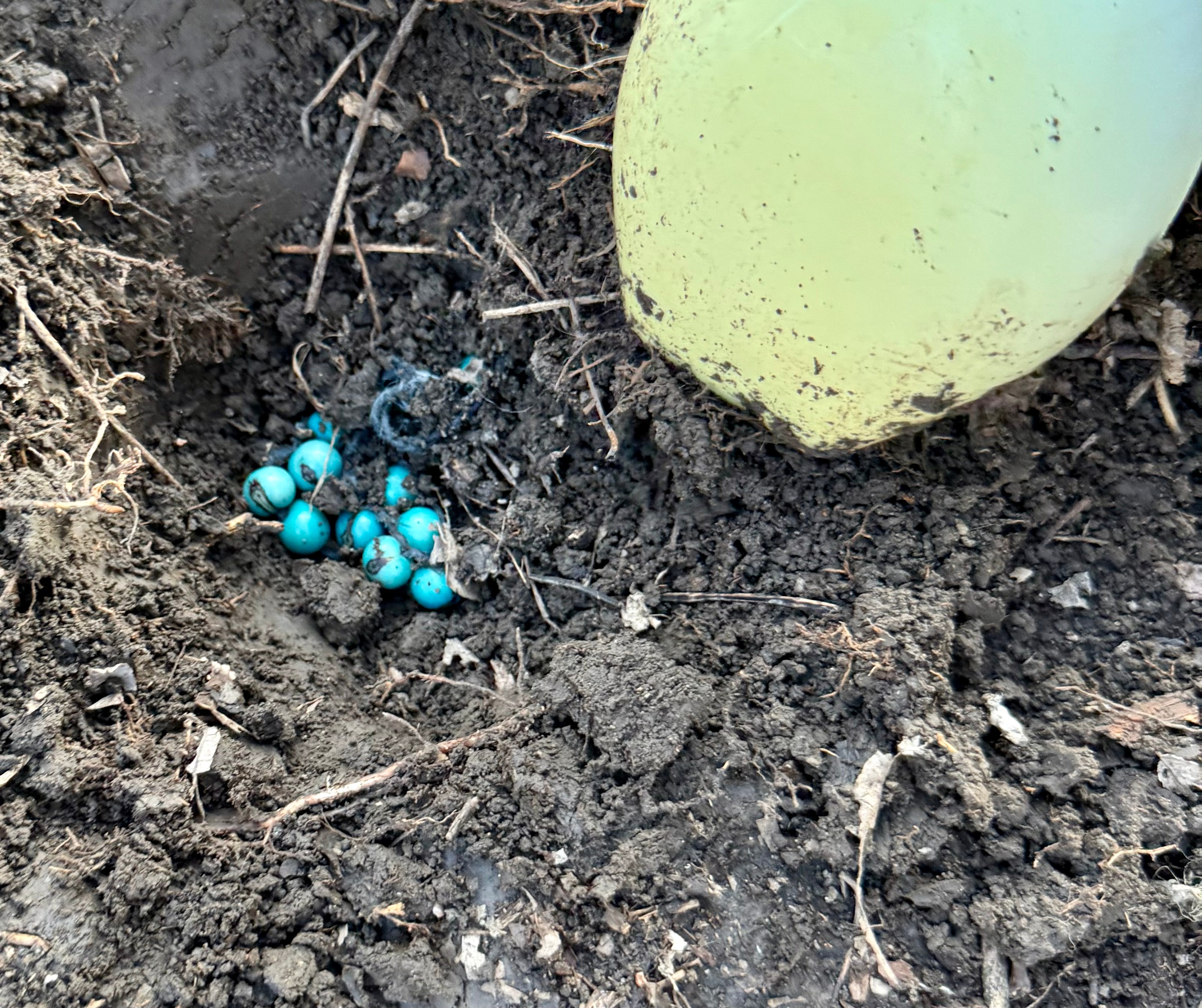
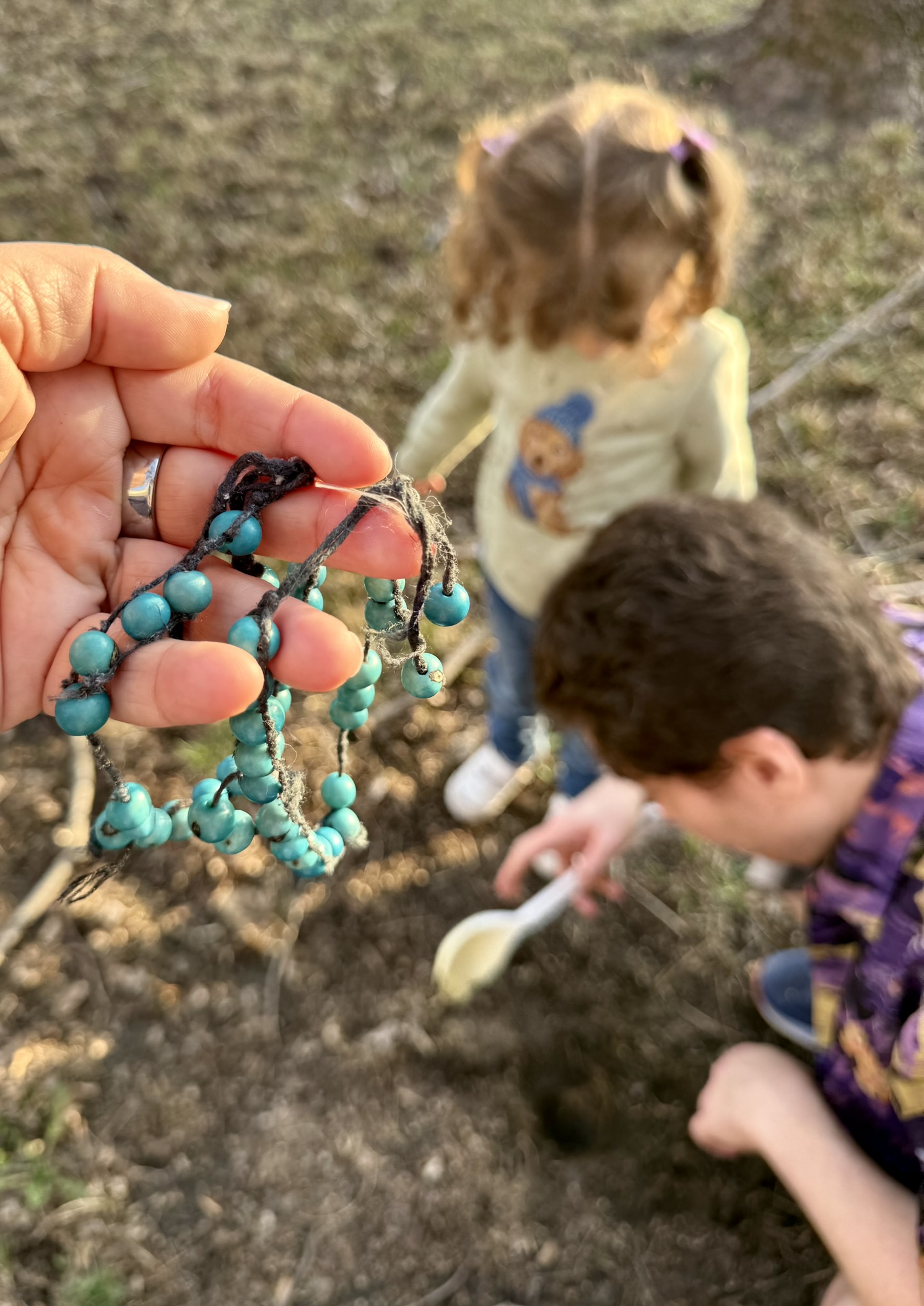
On Tuesday, Joseph, Ella and I buried this bracelet in the backyard. 
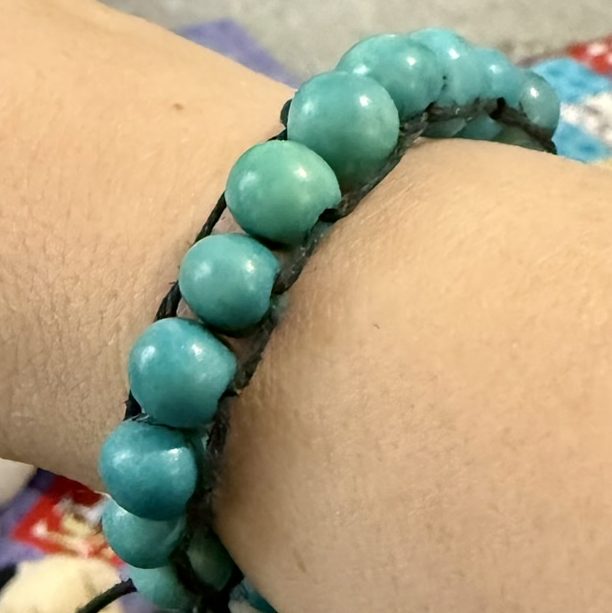
The bracelet had been with me for almost a year. On my wrist. In my backpack. My purse. It came with me to Kallah in Baltimore over the summer. It came with me to California for three visits and then a fourth when I officiated my grandfather’s funeral. It went to three different states when I officiated weddings in August, October, and January.

I bought the bracelet not long after we lost our last embryo on March 10, 2025. With that embryo, we also lost our last chance to become biological parents to a second child. I was still carrying the weight of the two pregnancies we lost before our miracle Ella, as well as the two losses that followed her. Even as I delighted in Ella every day, I grieved for the future I envisioned for us as a family of four. At the same time, my parents were preparing for their move to Florida. Realizing they are aging, I grieved anew that it took us so long to have a child and that we live too far away for frequent visits. I grieved for the time we lost and the time we won’t have. I grieved the end of my childhood, young adulthood, and the vision I’d had for my future. 

I had trouble speaking about this litany of grief because I also have so much to be grateful for. I know that grief does not undermine gratitude – it actually expands our capacity for it.  But it was still hard for me to name this weight, padlocks dangling heavy on the gates of my heart. 

If anyone else had come to me with this problem, I would have designed a ritual for them, some way to externalize the feeling, acknowledge and validate it. I would have invited them into ritual to honor the memory of what had been lost, and to support their steps into the future. But as our sages taught, in a famous Talmud passage, “A prisoner cannot free themself from prison.” In the story, Rabbi Yohanan, who had the power to heal others from sickness, could not heal himself. He needed a friend to help, and so did I (Talmud Bavli, Brachot 5). It was Reb Irwin who suggested a bracelet made of biodegradable materials. Something that I could keep for a year and then bury. I’d made similar suggestions to others coping with miscarriages – carry a rock for a week, a month, or as long as you carried the pregnancy, and then bury it. In the absence of a body, a casket, or a funeral, it’s helpful to hold a physical item, return it to the earth, and say goodbye. The loss of this embryo seemed to carry all the previous losses inside of it, a set of faceless Russian nesting dolls. With all of those layers, it felt like a year was the right amount of time to carry the bracelet. 

The bracelet I selected was made of turquoise acai seeds and black cotton thread. When it arrived, I counted 22 beads. One for each letter of the Hebrew alphabet. In Jewish tradition, 22 is a number that represents creation and completion. The mystics teach that these letters were the building blocks of the universe. In Bereishit, God created 22 things within the six days of creation, and rested when the work was complete. And in gematria, Hebrew numerology, the number 22 = יחד yachad, which means “together.” 

Despite my intent to wear it daily (and the mystical meaning I was rapidly assigning to acai seeds on a string), the bracelet itself was not the sturdiest. The woven structure fell apart within two weeks. I bought a second one. After all, if I wanted this item to stay with me for the duration of a year, I needed something durable, something that could hold itself together. The second one fell apart as quickly as the first, and I found myself asking my friend Bekah to help me stitch the beads back in line at ALEPH’s Kallah over the summer. Bekah is a Kohenet, artist and ritual guide; I told her why the bracelet was important to me, and asked for suggestions. How could I keep it from falling apart? 

I spent a lot of time rethreading the beads in the art room during breaks at Kallah. I tied and retied them, but no matter how I tried, I couldn’t get the beads to line up as they had before. Bekah noticed, and she reflected my behavior back to me – my singular focus on stringing the beads in a specific way. And I realized that for years, I had been trying to build my life the same way. No matter how hard I try, I just can’t control the future. I can pick the colors, string the beads, line everything up, create something beautiful – but sometimes, the thread breaks, the colors fade, the last embryo fails to attach. Sometimes, I am left with something less than what I’d envisioned, and more beautiful in its authenticity. I am left with the life I have, and the best thing I can do is wrap it around my wrist, and wear it with love. 

I kept both of the broken bracelets, carried them through my own wilderness, like the broken Tablets of the Covenant the Israelites carried, along with the whole ones, in their traveling sanctuary (Talmud Bavli, Bava Batra 14b). I kept one bracelet within my eyesight in my office, and kept the other in my backpack or purse. These artifacts of my grief made the losses visible, even if they were only visible to me. 

This past Tuesday was March 10, 2026. One year had passed since the day we learned about our last embryo. It was time for burial. Since I had two bracelets, I decided to keep one as a reminder of what I learned in the art room at Kallah. I brought the other out to the yard behind the house we’ve been renting in Urbana for the last four years. I moved into this house mid-miscarriage, and it’s the house we brought Ella home to when she was born. It’s the last home we ever shared with Gulliver. 

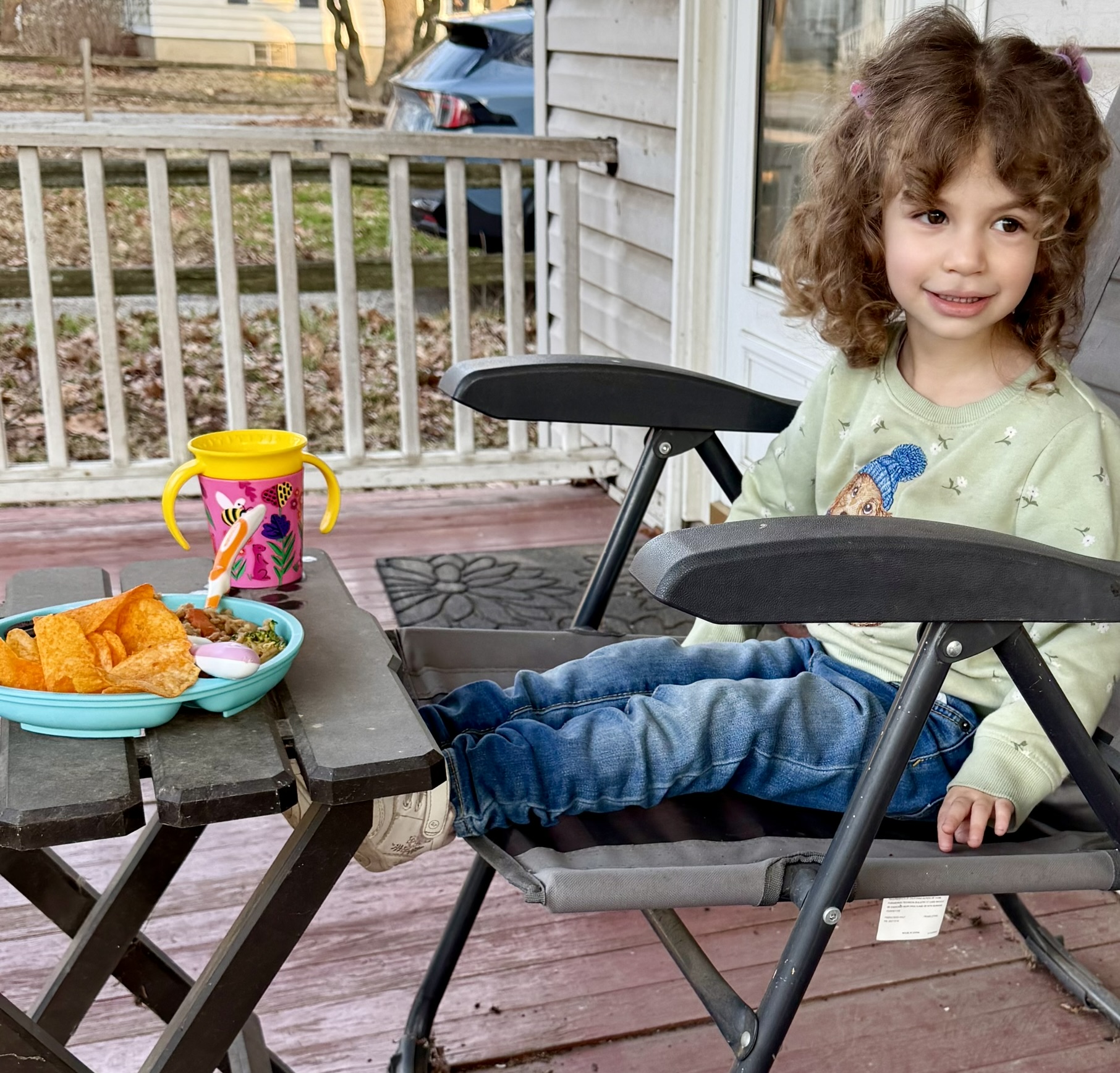
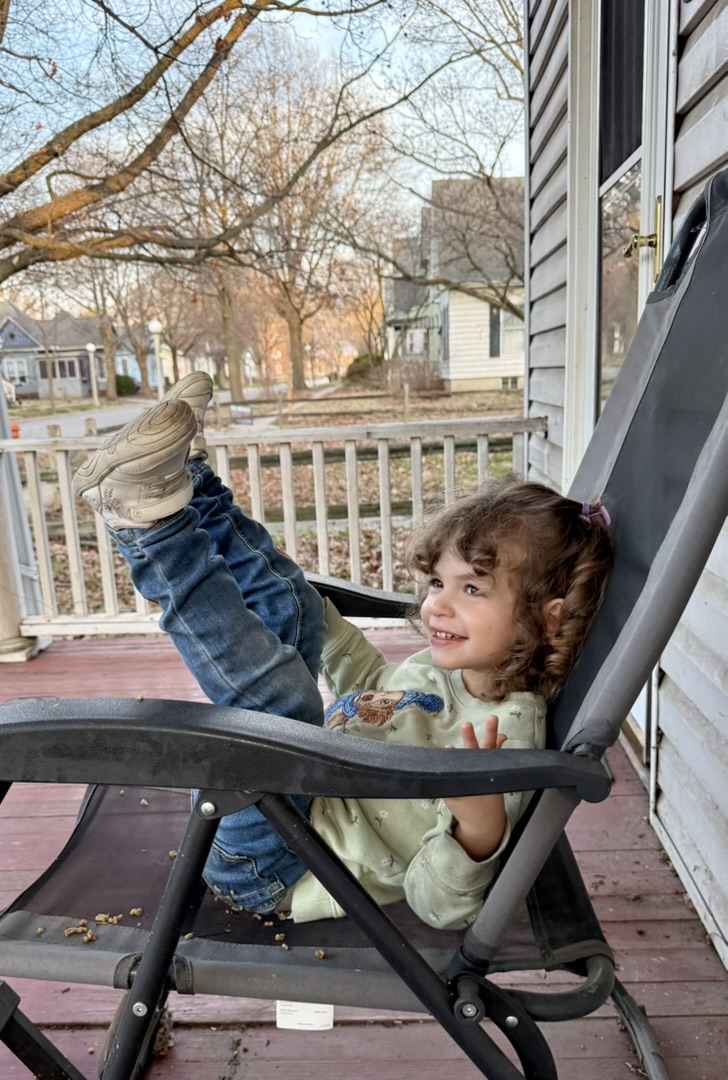
It was a beautiful spring day. Ella was wearing her favorite sweatshirt, the one my mom made for her with a dog embroidered on the front. We didn’t have a gardening trowel, but the earth was soft enough that we could dig a small hole with a snow shovel and soup ladle. “Today we are outside in the yard!” Ella chattered, telling us about the trees, the grass, and the wildflowers. She was excited to help us dig, “like a doggie!” I didn’t feel the need to say a blessing of any kind, or to name out loud what we were doing and why. It was beautiful to just be yachad – together – returning these 22 seeds to the earth. Ella asked if we could eat dinner outside afterward, so we sat together on the porch, enjoying the evening. 

One year after a traditional burial, Jews do an unveiling ceremony. The headstone is covered until that time, and at a ceremony around the one year anniversary, the veil is lifted. This was a different kind of loss, and I was burying, not unveiling. But something lifted for me that night as we sat on the porch together after burying the bracelet. For a few moments, there were no veils separating the life I am living from the life I had envisioned. I tied my daughter’s laughter with string, wrapped it twice around my heart, and I knew, in that moment, that we are everything we need. 
Witnessing: Yom Kippur Sermon, 5785

When I was regularly facilitating children’s grief groups and volunteering at grief and cancer camps, I had a recurring dream. In the dream, I was facilitating a grief group, much like the ones I led in waking life. The crucial difference is that the dream grief group was a grief group for the dead. My job in that dream was two-fold: to witness the dead as they grieved the lives and loved ones they left behind, and to support the dead through this transition, to help them integrate their new reality. These dreams were never scary. They were tender. Loving. We even laughed together, just like we did in my grief groups for the living.

Almost always, the deceased parents of the children I worked with in waking life showed up in my dream grief groups. I recognized them immediately when they walked in, because their living children had shown me pictures of them at candlelight memorials and in popsicle stick photo frame activities. I’d heard so many stories about these deceased parents from their living children, whose grief I witnessed in waking life. One teen described her late mother as feisty and smart. She was a brilliant scientist who always wore bright red lipstick. When that deceased mother came to my dream grief group, she appeared just as her daughter described her, red lipstick and all. 

My unconscious mind fabricated grief groups for the dead based entirely on stories shared by their living children – memories, quirks, inside jokes, and even the tough moments – the ones that emerged late at night at grief camp. “My last conversation with her was an argument. It was so stupid.” “I was so angry at him for the drug use. What if he didn’t know I loved him?” In my dream grief groups, the deceased parents and I fondly remembered their children together. Their parents were always so proud of them. 

The dream groups were intimate. Personal. Powerful. It was my mind’s gentle way to witness my own witnessing – to make sense of the countless stories of loss I carried with me over my decade working with these children. 

Grief group facilitation taught me a lot about the power of witnessing – or, as my friend Rabbi Irwin Keller says – “with-nessing.” With grief, there is no problem-solving, no solution. Nothing can be done to change the situation. Witnessing and being-with are the greatest gifts we can offer. 

The Shema, the most central statement in Jewish liturgy, is a proclamation of our witnessing. In the Torah, the last letters of the word “Shema,” which means “Hear,” and the word “Echad,” which means “One,” are written in larger script than the rest of the text. These letters are Ayin and Dalet. Together, they spell “witness.” The Shema is a call to witness the Oneness of the Divine Presence as it unfolds in the world. In other words, even God needs to feel seen. 

For a number of reasons, I stopped facilitating children’s grief groups after I moved to Champaign-Urbana. The dreams stopped coming at regular intervals, and then they stopped entirely. I was focused on life in a different way, so I stopped dreaming about the dead.

After October 7, 2023, I was sure the dreams would return. I was grief counseling full time, even when we didn’t call it grief counseling. I facilitated groups. I witnessed the pain of countless students, friends, and colleagues. But the dreams didn’t come.

Until September 1st. Since that night when six hostages were murdered, those hostages and others who died on and after October 7th have been visiting my dream grief groups. Like the parents of the children I used to work with, I know the faces and stories of the dead from the living people who loved them. I’ve met musicians, tattoo artist, Shani Louk (z’l), and children who were murdered in their kibbutz bedrooms. I met Carmel Gat (z’l), who was a mindfulness meditation and yoga instructor. In my dream grief groups, she leads some gentle movement for the group each time we meet. The murder of those six unlocked the part of my dream life that processes my grief, and the grief of those I witness – by helping the dead process theirs.

Yom Kippur has a lot to teach us about death, grief, and witnessing. Jewish tradition considers Yom Kippur to be a “dress rehearsal” for our own deaths: We refrain from eating and drinking, washing and pleasure, and some people wear white, evoking the image of shrouds. I’ll talk about that tomorrow morning. Yom Kippur invites us to witness the grief of others, as we experience our own grief at the Yizkor – memorial – service. 

There’s also a Yom Kippur afternoon service that is not often included in Reform spaces, but its message is an important one for this year. It’s called Eyleh Ezkerah – “These I remember,” based on lines that we repeat throughout the service: “Eyleh Ezkerah v’nafshi alai eshp’khah, al koroteinu ha-marot einai zoglot dimah” – “These I remember, and nafshi – my soul – melts with sorrow. For the bitter course of our history, tears pour from my eyes.” The service tells the stories of generations of Jews who were murdered for being Jewish – from Rome to Mainz during the First Crusade to the Spanish Inquisition. “These we remember,” we say again, and again. None of us personally knew rabbinic greats like Rabbi Akiva and Rabbi Shimon ben Gamliel – but we remember them based on the stories of others. The Eyleh Ezkerah service offers a way for us to use ritual and memory to witness the dead, and to create meaning for the living.   

Earlier this week, on the anniversary of the October 7th massacre, students and staff worked together to implement a student vision – a memorial museum. Far from a static walk-through museum with statistics and political analysis, the experience lifted up the stories of actual people – soldiers, people who lived and died in the kibbutzim, and people who witnessed the murder of their loved ones at the Nova festival. First-person testimonials were the fabric of this experience. We felt the presence of those who died on the 7th through the powerful stories and memories of those who loved them. 

And each of us who walked through the museum was a witness. A witness to the stories. A witness to others walking beside us. A witness to our own grief – grief we may have forgotten during an intense year of political argument and analysis. Eyleh Ezkerah. These we remember. Late at night on October 8th, when we cleaned up and put away the museum pieces, it felt like uncovering the mirrors in a home after shiva. That night, more of the dead from October 7th and beyond attended my dream grief group than ever before. 

In my Erev Rosh Hashanah sermon, just 10 days ago, I said that I don’t know what to say about October 7th, and it’s still true. But that’s because there’s nothing we can say that will change what happened. 

It turns out that, once again, it’s not about saying something

Listening is greater than speaking.
Presence is greater than power.
Witnessing is sometimes the most precious gift we can offer.

Surrounded by death, witnessing says “I am here. We are alive. We are together. You are not alone.” 

In my dreams, no one, living or dead, is grieving alone. 

We are all witnessing each other. 

And we are comforted.