Witnessing: Yom Kippur Sermon, 5785

When I was regularly facilitating children’s grief groups and volunteering at grief and cancer camps, I had a recurring dream. In the dream, I was facilitating a grief group, much like the ones I led in waking life. The crucial difference is that the dream grief group was a grief group for the dead. My job in that dream was two-fold: to witness the dead as they grieved the lives and loved ones they left behind, and to support the dead through this transition, to help them integrate their new reality. These dreams were never scary. They were tender. Loving. We even laughed together, just like we did in my grief groups for the living.

Almost always, the deceased parents of the children I worked with in waking life showed up in my dream grief groups. I recognized them immediately when they walked in, because their living children had shown me pictures of them at candlelight memorials and in popsicle stick photo frame activities. I’d heard so many stories about these deceased parents from their living children, whose grief I witnessed in waking life. One teen described her late mother as feisty and smart. She was a brilliant scientist who always wore bright red lipstick. When that deceased mother came to my dream grief group, she appeared just as her daughter described her, red lipstick and all. 

My unconscious mind fabricated grief groups for the dead based entirely on stories shared by their living children – memories, quirks, inside jokes, and even the tough moments – the ones that emerged late at night at grief camp. “My last conversation with her was an argument. It was so stupid.” “I was so angry at him for the drug use. What if he didn’t know I loved him?” In my dream grief groups, the deceased parents and I fondly remembered their children together. Their parents were always so proud of them. 

The dream groups were intimate. Personal. Powerful. It was my mind’s gentle way to witness my own witnessing – to make sense of the countless stories of loss I carried with me over my decade working with these children. 

Grief group facilitation taught me a lot about the power of witnessing – or, as my friend Rabbi Irwin Keller says – “with-nessing.” With grief, there is no problem-solving, no solution. Nothing can be done to change the situation. Witnessing and being-with are the greatest gifts we can offer. 

The Shema, the most central statement in Jewish liturgy, is a proclamation of our witnessing. In the Torah, the last letters of the word “Shema,” which means “Hear,” and the word “Echad,” which means “One,” are written in larger script than the rest of the text. These letters are Ayin and Dalet. Together, they spell “witness.” The Shema is a call to witness the Oneness of the Divine Presence as it unfolds in the world. In other words, even God needs to feel seen. 

For a number of reasons, I stopped facilitating children’s grief groups after I moved to Champaign-Urbana. The dreams stopped coming at regular intervals, and then they stopped entirely. I was focused on life in a different way, so I stopped dreaming about the dead.

After October 7, 2023, I was sure the dreams would return. I was grief counseling full time, even when we didn’t call it grief counseling. I facilitated groups. I witnessed the pain of countless students, friends, and colleagues. But the dreams didn’t come.

Until September 1st. Since that night when six hostages were murdered, those hostages and others who died on and after October 7th have been visiting my dream grief groups. Like the parents of the children I used to work with, I know the faces and stories of the dead from the living people who loved them. I’ve met musicians, tattoo artist, Shani Louk (z’l), and children who were murdered in their kibbutz bedrooms. I met Carmel Gat (z’l), who was a mindfulness meditation and yoga instructor. In my dream grief groups, she leads some gentle movement for the group each time we meet. The murder of those six unlocked the part of my dream life that processes my grief, and the grief of those I witness – by helping the dead process theirs.

Yom Kippur has a lot to teach us about death, grief, and witnessing. Jewish tradition considers Yom Kippur to be a “dress rehearsal” for our own deaths: We refrain from eating and drinking, washing and pleasure, and some people wear white, evoking the image of shrouds. I’ll talk about that tomorrow morning. Yom Kippur invites us to witness the grief of others, as we experience our own grief at the Yizkor – memorial – service. 

There’s also a Yom Kippur afternoon service that is not often included in Reform spaces, but its message is an important one for this year. It’s called Eyleh Ezkerah – “These I remember,” based on lines that we repeat throughout the service: “Eyleh Ezkerah v’nafshi alai eshp’khah, al koroteinu ha-marot einai zoglot dimah” – “These I remember, and nafshi – my soul – melts with sorrow. For the bitter course of our history, tears pour from my eyes.” The service tells the stories of generations of Jews who were murdered for being Jewish – from Rome to Mainz during the First Crusade to the Spanish Inquisition. “These we remember,” we say again, and again. None of us personally knew rabbinic greats like Rabbi Akiva and Rabbi Shimon ben Gamliel – but we remember them based on the stories of others. The Eyleh Ezkerah service offers a way for us to use ritual and memory to witness the dead, and to create meaning for the living.   

Earlier this week, on the anniversary of the October 7th massacre, students and staff worked together to implement a student vision – a memorial museum. Far from a static walk-through museum with statistics and political analysis, the experience lifted up the stories of actual people – soldiers, people who lived and died in the kibbutzim, and people who witnessed the murder of their loved ones at the Nova festival. First-person testimonials were the fabric of this experience. We felt the presence of those who died on the 7th through the powerful stories and memories of those who loved them. 

And each of us who walked through the museum was a witness. A witness to the stories. A witness to others walking beside us. A witness to our own grief – grief we may have forgotten during an intense year of political argument and analysis. Eyleh Ezkerah. These we remember. Late at night on October 8th, when we cleaned up and put away the museum pieces, it felt like uncovering the mirrors in a home after shiva. That night, more of the dead from October 7th and beyond attended my dream grief group than ever before. 

In my Erev Rosh Hashanah sermon, just 10 days ago, I said that I don’t know what to say about October 7th, and it’s still true. But that’s because there’s nothing we can say that will change what happened. 

It turns out that, once again, it’s not about saying something

Listening is greater than speaking.
Presence is greater than power.
Witnessing is sometimes the most precious gift we can offer.

Surrounded by death, witnessing says “I am here. We are alive. We are together. You are not alone.” 

In my dreams, no one, living or dead, is grieving alone. 

We are all witnessing each other. 

And we are comforted.
Hovering: Rosh HaShanah 5785

Wow. What a year. I have to be honest, friends. I don’t know what to say about it. I don’t know what to say about the year we are leaving behind. I don’t know what to say about where we are now – with rockets flying in multiple directions, slogans screaming across Instagram, countless lives lost and relationships shattered since October 7th. I don’t know what to say about where we are going in this new year when there’s no resolution in sight. We eat apples dipped in honey, illustrating our hopes for a sweet new year. But it can be really hard to think or talk about sweetness when we are tasting bitterness at the same time. 

The beauty of Jewish holidays is that they are both commemorative and experiential. We are asked to remember something that happened in the past – AND we experience it in real time. At Passover we are told that we ourselves are coming out of slavery. Rosh Hashanah is a time when we both remember and experience renewal, rebirth, and creation. When God began creating the world, 5785 days ago in Jewish time, the earth was tohu vavohu, chaos and void. And choshech, darkness, was on the face of the deep. And Ruach Elohim, the spirit of God, m’rachefet, hovered on the face of the water.

What was God feeling in that moment, hovering over the darkness? Was God afraid of the void? Anxious amid the chaos? What did it take for God to find the courage to say “yehi or,” “Let there be light?”

We, too, have known darkness this year. We have also faced the depths. And right now, we, too, are hovering – m’rachefet – between darkness and whatever comes next. What is it like living in this hovering uncertainty? What will it take for us to risk looking forward at all, let alone looking forward with something like hope? I don’t know. But I do know we have examples in our tradition of other moments like this one, and we can learn from our ancestors. 

Our ancestors shared an experience of darkness, chaos, and confusion at Mt. Sinai, waiting for Moses to bring Torah down from the mountaintop. When Moses ascended Mt. Sinai, the Israelites didn’t know when he would return, and they were terrified. In their fear and anxiety, hovering beneath the mountain, they turned to a destructive but familiar coping mechanism, like so many of us have in those uncertain moments – they built a golden calf, a false idol. 

How many of us have turned to an unhealthy habit in moments of anxiety in the last year? Me too.

Moses came down from the mountain with the commandments on two luchot, two stone tablets, and when he saw the golden calf, he was so furious that he shattered them. Moses climbed the mountain again. Even though he was angry at the Israelites, he pleaded with God on their behalf. And God forgave them on the 10th of Tishrei – a day that we now experience and commemorate each year: Yom Kippur. Then Moses descended with new luchot. 

A midrash – which is Torah fanfiction – on this Torah portion tells us how our tradition treats the brokenness we experience in times of darkness and hovering. When Moses came down from Mt. Sinai the second time, with new tablets, the Israelites kept the broken ones. They placed the broken luchot, along with the new ones, in the holy ark.

Why keep this symbol of our own fear, this casualty of rage, this set of broken laws? Because brokenness and wholeness live side by side in the world and in our hearts. Because we had to be in the wilderness, hovering, waiting, lost and afraid, worshiping a false god before we could worship our One God from a place of trust. We kept the broken tablets because learning is part of becoming. We kept them alongside the new ones, because brokenness itself is holy. The broken tablets, carried along with the whole ones in the Aron HaKodesh, the holy ark, represent the resilience that carried us through the rest of the uncertain wilderness.

Rabbi Harold Kushner (z’l) raised an important point about this story “…The saga of the golden calf, God’s anger at the people, Moses’ intervention and God’s forgiveness raise an interesting question: When something breaks, something that was precious to us, is it ever possible to put it together again so that it’s as good as new?” 

So much shattering occurred over the last year. Trust was broken. Relationships ruptured. Communities crumbled. October 7th splintered us again and again. How can we repair? Is it even possible to build ourselves up again so that we and our communities are as good as new?

Rabbi Kushner continued, “It would be nice to believe that a God of second chances would make that possible, but the reality seems to be no, you can’t. If it’s broken and repaired, it will never be the same. The crack will always show. But what a God of second chances does is make it possible that you will end up with something in its place that will be even stronger and better than the original.” 

What would it look like for us to build something better? And what examples can our textual tradition offer for guidance? 

After God hovered in darkness, over the face of the water, God said “yehi or” “let there be light,” and went about the work of creating the world for us. When we finished hovering in the darkness at the foot of the mountain with the golden calf, we went about the work of creating a Mishkan for God, an elaborate and collaborative traveling sanctuary. Each person contributed something of their own to the creation of the Mishkan. The sages consider the golden calf incident to be one of the darkest moments of our history – despairing, leaderless, and chaotic. Our ancestors came through that darkness and said “yehi or,” “Let there be light.” And they created a mishkan. 

The truth is that there is always darkness, brokenness, and loss. And – we can always say yehi or – while we hover within the tohu vavohu, within the chaos. Kohelet says “To everything there is a season, a time for joy and a time to weep.” In his poem, “Kohelet Wasn’t Right,” Israeli poet, Yehuda Amichai responds that no, these are not separate times. “In the days when each hour collides with the next,” he says, “we have no choice but to cry and to laugh with the same eyes, to mourn and dance at the same time.” We have to carry the broken tablets with the whole ones. We have to create light while the darkness swirls around us. When false idols have made us forget that we are One, we have to build a mishkan together. 

Does it sound impossible? That’s ok. It won’t happen perfectly, or all at once. Creation didn’t happen just one time – creation is always unfolding, all around and within us. 40 days and nights passed before Moses came back down the mountain with the new tablets after seeing the golden calf. It took time for the Israelites to return to the mishkan. Healing is a long and by no means linear process. We may continue hovering – m’rachefet –  over the depths for awhile.

In the meantime, we have ancestral tools, handed down in our hearts and in our liturgy, that can help us make incremental change. One of these tools is selichot – forgiveness. Rabbi Kushner wrote that “The crack in the first set of tablets was the loss of the dream of perfection. Now the challenge facing you is… can you replace that dream of perfection…with a more realistic one… that will make allowance for human frailty? … Can you give yourself and those around you permission to be human…? On Yom Kippur, so many years ago, God forgave the people who built the golden calf. He forgave us for being human beings, with hopes that we would learn to forgive each other as well.” 

Can you forgive yourself for the moments when the darkness was unbearable, the moments when the shattered pieces of your heart cut so deeply you couldn’t see the whole ones beside you, the moments when hovering was the only option because you couldn’t find light amid the chaos? Can you forgive your community for the moments when we failed to hold you in the way you needed to be held? Can you forgive God for God’s imperfect world? 18th century Ukrainian rabbi, Rebbe Nachman of Breslov, taught that Moses was able to find the nekuda tovah – the good point, the Divine Spark – in the Israelites when he pleaded with God on their behalf on top of the mountain. Nachman teaches that this is what allowed the Israelites to move from building the golden calf to building the mishkan – all it took was one person seeing the good inside of them. Forgiveness is another way to say “yehi or.” Let there be light. 

5784 had darkness, chaos, confusion, and grief. We have been at the foot of the mountain with the golden calf.  At this exact moment, when we remember and experience the story of creation, we are m’rachefet – hovering – on the face of the depths. How can we say “yehi or,” like God, when God created from darkness? How can we say “yehi or,” like our ancestors who contributed to the mishkan after contributing to a golden calf? How can we build new tablets – while we hold onto the broken ones? We have looked at an ancestral tool, but we can and should draw on personal experience as well. 

Take a deep breath. Think back on some of your own, personal, darkest moments from this last year. What are the qualities you already had inside you, what are the roots you returned to, what did you discover that was grounding, replenishing, and brought you a little more light? What did you try? What was helpful for you?

Even in this dark year, you were able to find “yehi or” moments. Looking back on our year at Hillel, I can also see examples of times when we said “let there be light” as a community, not in spite of, or even because of, the chaos – but because it is what we do. It’s part of who we are. 

Yes, there was rupture within our community. And, over the twenty-five Bagel Brunches we shared on Sunday mornings, we ate 1,250 bagels in total. There’s an ongoing hostage crisis and war in the Middle East. There was anger, distrust, and antisemitism on campus. There was also Matzo Ball, a festive Hollywood themed semi-formal at Joe’s at the beginning of spring semester. We were anxious and uncertain, but we also celebrated Purim with 300 of our besties at the seventh annual Purim drag show. The news cycle was relentless and depressing. And we played a lot of Dungeons and Dragons. We said “yehi or” when we piloted a wellness-themed Jewish Learning Fellowship, where students shared from their hearts and deepened their relationships. We said “yehi or” when we welcomed the angels, and each other, by singing Shalom Aleichem together before each Shabbat meal. With the darkness – light. With the brokenness – creation. With the hovering – a mishkan, a gathering space for sacred community. 

Contemporary scholar of kabbalah, Dr. Melila Hellner-Eshed, writes that “An envelope of bitterness encases the divine sweetness,” yet we can “reach the sweet, divine essence hidden within the layers of the world’s bitterness.” So we will dip our apples and our challah in honey for a sweet near year. We will practice forgiving ourselves and each other for our imperfections. We will rebuild relationships and repair our community. It won’t be the same as before, but it will be stronger. We will honor our brokenness and our wholeness. We will turn away from false idols and we will work together to create a better world. We will say “yehi or.” Say it with me: “Yehi or.” Let there be light. 

Shared with gratitude to Rabbi Bluth and Josh Feldman for helping me figure out what to say in a year when none of us really know what to say. Your friendship and mentorship means the world to me.

Lag B’Omer 5784

Today is Lag B’Omer, the 33rd day of the 49 between Passover (liberation) and Shavuot (revelation) on the Jewish calendar. The Omer is a time of mourning for the deaths of 24,000 of Rabbi Akiva’s students, possibly due to a plague, or due to the Bar Kokhba revolt. On Lag B’Omer, we learn, the plague lifted, or perhaps there was a pause in the fighting. Either way, the deaths stopped.

Lag B’Omer is also the yahrzeit (anniversary of death) for the great mystic, Rabbi Shimon Bar Yochai. Before he died on this day, he told his students that today should be a “day of joy” for them – a day of happy remembering, of lifting up the sparks of his teachings.

Today, in recognition of these historical events, Lag B’Omer is a day when the mourning practices of the Omer period either pause, or stops completely, depending on communal tradition. It interrupts our grief. Lag b’Omer is a day that is often celebrated with bonfires, music, friends and family, and time spent outside.

For the last eight months, my communities and many others have been mourning. Without going into specifics, I will share that nothing has been the same for any of us since 10/7. I’ve been a Jewish communal professional for 15 years, and have spent 10 of those years on campus. This was by far the most challenging. My colleagues and I have been grief-tending, listening, supporting, and teaching students how to be in community with those whose opinions are different from their own. It’s been important work…and it’s been exhausting work. It has been all-consuming.

But today is Lag B’Omer, and so we interrupt our grieving. We emerge from the caves of our pain, as Rabbi Shimon Bar Yochai and his son emerged from their cave after 12 years. We remember that celebration is holy. We remember that we can hold multiple truths, multiple feelings, exploring the paradox of joy and sorrow, love and loss. We gather at bonfires. We sing if we can. We try to lift up the sparks.

I am in Los Angeles to officiate a wedding today. The marriage canopy is open – it has no walls, so the love of the couple can spread throughout the world. According to mystical traditions, the love and marriage of the couple has the power to change the very fabric of the cosmos.

So, today, wherever you are, whatever you believe, I hope you can feel it. I hope you feel the love that is pulsing through universe. I hope you stop even if it’s just for a moment, and allow that love to interrupt your grief. It has been hard for a long time and the hard times are not over. But just for today, join me. Go outside if you can. Build a bonfire in your heart. Take a deep breath, close your eyes, and say “thank you.”

Happy Lag B’Omer, beloveds. May we all find a way today to celebrate the love that surrounds us.

Common Ground

“Rabbi,” she said, “I don’t believe in coincidences.” 

I was strapping my daughter into her stroller for a walk when I received the call. Her name was Dr. Daniela Hermelin, and she was the Chief Medical Officer for ImpactLife Blood Center, an organization that coordinates blood donations. I had reached out to the local chapter in July to schedule a blood drive at Illini Hillel for today, October 12. I figured it would be an easy service program for students after the start of the Jewish new year. At the time, I couldn’t have known that my community would be reeling from the impact of a war and terrorist attacks that began in Israel on October 7th. 

Even with the war tearing us apart, I believe the blood inside us unites us more than we are divided by blood spilled on the ground. Dr. Hermelin asked if Hillel was hosting the drive as a response to the war. I told her that I’d planned it months ago and that even though my students were deeply impacted by the war, we had decided to move forward with the blood drive. We could still make a positive impact by giving with our bodies, even with our hearts and minds on Israel and Palestine.

“It’s never the wrong time to do a mitzvah,” I said, and then explained, “a good deed.” 

“Yes,” she responded. “I’m Jewish. And I’ve been in contact with Magen David Adom. If they need more blood, we offered to send some from our donors.” 

I took a deep breath. Magen David Adom is the Israeli version of the American Red Cross. The organization is responsible for emergency medical care and blood services, and they treat any individual who needs help – regardless of ethnicity, race, or political or religious affiliation. 

“I don’t want to make any promises,” Dr. Hermelin continued. “So far Magen David Adom doesn’t need more blood because they have so many donors in Israel. But you can tell your students there’s a chance that their donations today will save the lives of people impacted by this war.” My heart leapt into my throat. 

“Rabbi, I don’t believe in coincidences. You didn’t know this would happen, but this is the day you chose to host a drive. If there’s anything I can do to support you and your students, let me know. I’m a Jewish mother. We are in this together.” Together – united by our shared humanity.

I felt tears on my cheeks, my first since the crisis began. All week I’d been in action mode, but my tears and words had been frozen inside me. I’d been texting students late into the night and meeting with students to help them process. I helped students advocate for academic support. As someone who tends toward action and care for others, until this moment, I hadn’t cried yet myself. 

I thanked Dr. Hermelin for reaching out and told her I’d pass the message along to students. She promised she would update me on the partnership with Magen David Adom moving forward. “From one Jewish mother to another,” I said, walking my daughter down the street, “thank you.”

This week we read Parashat Bereishit, the very first chapters in the Torah. In Genesis 2:7, we learn that God formed the first human, adam from adamah, earth – “the dust of the ground.” God “breathed into his nostrils the breath of life, and the human became a living being.” The Hebrew word for human, adam, includes the word “dam,” which means blood, and adom, which means red. 

The terror attacks and the war in Israel broke in the US on Sunday as we celebrated Simchat Torah, preparing again to read the creation story. All week, blood flooded my newsfeed as I watched, horrified from afar. All week, blood – dam – splattered on the earth – adamah. Blood of b’nei adam, children of the first human. All of them formed – as we learn in this week’s parsha – b’tzelem Elohim – in the image of God. Later in the same Torah portion, after Cain has murdered Abel, God cries out, “Your brother’s blood, dam, cries out to Me from the ground,” adamah. 

These words from the parsha have been inside of me all week as I grieved for my student’s brother, an IDF soldier taken hostage, for an acquaintance of mine from Seattle, kidnapped and murdered, for the peace activists and concert-goers. I grieved for the babies, and for the mothers who would never be able to take their daughters on a walk again on a beautiful fall morning. The blood cries out from the earth. The blood cries out from inside of us. The blood that unites us all, b’nei adam, children of Adam, part of God’s marvelous creation.

In the book of Leviticus, Aaron, the High Priest, watches as his sons, Nadav and Avihu, die when they bring a sacrifice to God. A fire erupts and envelops them. There are no reasons cited for their deaths in the Torah, though many scholars have offered suggestions. After Nadav and Avihu die, the Torah says “Vayidom Aharon,” Aaron was silent. Sometimes there are no words for tragic loss. Vayidom comes from the word damam, a word for silence that appears only one other time in the Torah, referring to a stone-like silence – a paralysis. 

As a mother who turned away but could not turn away from my newsfeed this week, I understand Aaron’s frozenness, his lack of voice – even though he was the leader who spoke for his brother Moses, when Moses could not speak himself. My own words and tears were frozen inside me all week – damam – a silent stillness – while I watched the dam of b’nei adam spill on the adamah. It was the call from Dr. Hermelin, the Chief Medical Officer of ImpactLife Blood Center, a call that came as I played with my own baby girl, that finally caused my thaw, allowing my tears and words to flow in response. “Rabbi,” she said, “I don’t believe in coincidences.” 

I don’t know if I believe in coincidences. But I believe in humans, b’nei adam. I believe in the medical officer mother who reached out to say “thank you” and “you’re not alone.” I believe there is never a wrong time to do a mitzvah, and that we should always give blood when we can.  Whether it supports victims of distant war that is close to our hearts, or patients in the hospital down the street, it makes a difference. I believe that we are each designed b’tzelem Elohim, in the image of God, and that our diversity reflects the different ways the Divine manifests on earth. And I believe that even as blood cries out from the land, the blood inside of us unites us. In time, when we are able to break through the damam, the silence and shock, I pray that we remember our shared humanity. May we use our voices to remind others – and ourselves – that we are in this together.

Voice from the Void: 30 Scatteredleaves Creations from 2020

Sometimes words bang on the doors of me, begging to be let out. Is it a striving desperation to make meaning out of madness? To tame an untamable experience by shaping it with narrative?

Several weeks ago, my classmates and I encountered Rebbe Nahman’s texts about The Void – and the silence within it. For many of my classmates, facing that silence led to more silence. But for me, it just made the words louder. I write constantly. Sometimes the words rush from my fingers faster than I can type them, an unstoppable flood pouring from the rock Moshe hit with his stick, when he couldn’t find words himself. It seems the harder it is to find the words, the more the words find me.

Chaim Bialik writes, “It is that very eternal darkness that is so fearsome – that darkness from the time of Creation…Every man is afraid of it and every man is drawn to it. With our very lips we construct barriers, words upon words and systems upon systems, and place them in front of the darkness to conceal it; but then our nails immediately begin to dig at those barriers, in an attempt to open the smallest of windows, the tiniest of cracks, through which we may gaze for a single moment at that which is on the other side.”
Perhaps writing is one of my attempts to create a penimi from a maqqif (something I can grasp within that wish is ungraspable). A way to crack a hole in the darkness of the void. A way of finding God in a place that appears empty, so that I can chase the next void, and the one after that.

With that in mind, I share a list of things I created within the void of 2020 – rituals, poems, prayers, and videos. This is not a comprehensive list. I only included the creations I felt I could publish or name in this space or elsewhere. The list doesn’t include all of my school writing (one of my classes had weekly reflection assignments) and it doesn’t include every private ritual I created for people who needed them. It also doesn’t include the virtual programs I built. But it’s a start.

I’m grateful for all the words that found me in the emptiness, but I pray for a 2021 that is full – full of inspiration, full of healing, and full of hope. Blessings on your journey, beloveds. See you on the other side.

Published on Ritualwell:

  1. Prayer Before Starting IVF
  2. Postponement Prayer (also published in When the World Turned Inward, Vol. 2)
  3. Virtual Memory Circle
  4. Hearing in our Hearts
  5. God’s Lament: A Letter to Daughter Zion (from Reb Shulamit’s class)

Videos:

  1. What Have We Lost?
  2. History of Loneliness
  3. History of Languages
  4. Looking Behind: A Monologue from Lot’s Wife
  5. Light and Darkness

Published in the Forward:

  1. ‘In the Torah, name changes signify moments of transformation.’ In the lives of transgender Jews, they are just as powerful

On my blog

  1. Nahman’s Dancing Circle, Chayei Sarah, and Pixar’s Inside Out (reflection assignment for Reb Elliot’s class)
  2. Get In, Get Real, and Grow (reflection assignment for Reb Elliot’s class)
  3. Letter to Rebbe Nahman (reflection assignment for Reb Elliot’s class)
  4. Shelters (in Place): A Pandemic Sukkot
  5. Holding the Shattered Pieces
  6. Grief in the Book of Ruth: Ruth’s Letter to Mahlon (from Reb Shulamit’s class)
  7. Silent and Sacred: Parshat Shmini for 2020
  8. Letter from God to the Ones Who Struggle: A Reinterpretation of Song of Songs (from Reb Shulamit’s Class)
  9. Alone Together: Parshat Vayikra
  10. Where Are You?

Publishing in 2021, but written in 2020

  1. Letter from Vashti to the New Queen of Shushan (publication set for February, I hope) 
  2. Prayer for the Covid-19 Vaccine
  3. Havdalah for Letting Go 
  4. Mezuzah Ritual for Moving into a New Home

Papers for Biblical Civilizations class

  1. A Tale of Two Floods 
  2. “To Teach and Enlighten:” The Book of Joshua and the Book of Judges
  3. Three Contemporary Prophecies written in the style of the prophet, Ezekiel
  4. A Contemporary Apocalypse in the style of the Book of Daniel
  5. Bringing Biblical Life and History to Hillel 

What Have We Lost?

On July 30, 2020, I invited people to share up to five things they’ve lost since COVID-19, in just a few words each, in observance of Tisha B’Av, a day of mourning on the Jewish calendar. Over 25 hours, 95 people shared their losses anonymously in a Google Form. These are some of the results.

Thank you to everyone who contributed. May we swiftly return to a time of life, a time of touch, and a time of healing. If the video moves you, please share.

Holding the Shattered Pieces

“Suffering breaks our hearts. But there are two quite different ways for the heart to break. There’s the brittle heart that breaks apart into a thousand shards, a heart that takes us down as it explodes and is sometimes thrown like a grenade at the source of its pain. Then there’s the supple heart, the one that breaks open, not apart, growing into greater capacity for the many forms of love. Only the supple heart can hold suffering in a way that opens to new life.” 

I’ve been thinking about this teaching from Parker Palmer a lot lately. Yesterday was the 17th of Tammuz. Traditionally, this is a Jewish fast day commemorating the breach of the walls of Jerusalem before the destruction of the Second Temple.  It also marks the beginning of the three-week mourning period leading up to Tisha b’Av, the day when the first and second Temples were destroyed. These three weeks are known as Bein ha’Metzarim, between the narrows. No Jewish marriages or other celebrations are allowed at this time, since the joy of these occasions conflicts with the mood of mourning.

The 17th of Tammuz also arrives 40 days after Shavuot. This is the day when Moses came down from Mt. Sinai and found that the Israelites had built a golden calf while he was receiving the Torah. Moses was furious and he shattered the tablets. He went back up the mountain, and the Israelites went back to…waiting. Waiting with their grief, their fear, and their brokenness, the shattered tablets laying before them. 

We have been sitting in our own waiting place, Bein ha’Metzarim. By my count, it’s been 120 days since the quarantine started. Even if you are numb at this point, the emotions that surfaced at the start of COVID are still there, exacerbated by losses due to racial violence. Some days it might feel like you’re moving through molasses – there’s a fatigue you just can’t sleep off. Maybe you’ve snapped recently at someone who did nothing wrong, or there was a moment when a minor stumble felt like a disaster. All of it is grief – for the 135,000 who have died from COVID-19 in the US alone, for racial violence, for the special moments we’ve had to share on Zoom instead of in-person, and for all the plans we can’t fulfill. In progressive Jewish communities, we don’t often observe the three weeks or Tisha b’Av. However, as we wait at the foot of the mountain, sitting in our collective brokenness, and unsure of what comes next, it may be necessary to engage with this part of our tradition. And we should engage with it, as Parker Palmer has said, with a broken and supple heart. 

The Talmud teaches that when Moses came down from Mt. Sinai the second time, with new tablets, the Israelites kept the broken ones. They placed them, along with the new tablets, in the holy ark. Why? Because our ancestors knew brokenness and wholeness live side by side, in the ark and in our hearts. Some even taught that brokenness is not only natural – it’s necessary. The Kotzker Rebbe taught that “There is nothing so whole as a broken heart.” And in a Hasidic folk tale, a disciple asked a rebbe: “Why does Torah tell us to place the words of the V’ahavta upon our hearts instead of in our hearts?” The rebbe answered: “It is because our hearts are closed. So we place them on top of our hearts. And there they stay until, one day, the heart breaks and the words fall in.” The Lurianic kabbalists taught that brokenness itself is holy: When God created the world, God tried to contain God’s light in vessels that shattered into millions of pieces. We each contain a spark of this Divine light, this symbol of God’s own brokenness. 

The message from our tradition is clear: Our hearts have to break. We have to feel our grief. And we do not to have experience our brokenness alone. These three weeks are a time when we can grieve with community. When we are Bein ha-Metzarim, we are like the tablets in the holy ark. We are held in our brokenness, we are whole in our holiness, and we are healed when we hold the shattered pieces for those around us.

As we sit with the shattered tablets, as we wait in our brokenness, I want to bless each each of us with a heart that is supple – one that is open to our own suffering and to the suffering of others, so that the words of our prayers fall in, and so that we may we renewed again. 

Silent and Sacred

Parashat Sh’mini for 2020

In this week’s Torah portion, Aaron’s sons, Nadav and Avihu, brought an offering to God. Their offering was an “aish zarah,” a strange fire, which, the Torah says, God did not command them to bring. For reasons that are unclear in the Torah portion, “a fire went out from God and consumed them, and they died before God.” Why did God kill Nadav and Avihu? The rabbis scrambled for reasons.

Medieval scholar, Rashi, said that Nadav and Avihu were punished for their father Aaron’s sin of worshipping the Golden Calf at Mt. Sinai. Other rabbis’ views were documented in Midrash Rabbah. One posited that Nadav and Avihu were killed because they were drunk, referring to a later verse stating that you should not drink at the tabernacle. Others thought Nadav and Avihu were killed because they entered the sanctuary without washing their hands and feet, or that they were killed because they didn’t have children. The root of the word “zarah,” strange, is “zoor,” which can also mean profane. In the same Torah portion, we are commanded to separate the sacred from the profane, a teaching that appears in our Havdalah blessings, when we separate Shabbat from the rest of the week. Some argued that God killed Nadav and Avihu because they brought this strange, profane fire into the tabernacle, into the realm of the sacred. The truth is that none of these reasons justify their deaths.

After Nadav and Avihu died, the Torah says, “veyidom Aharon.” And Aaron was silent. The word sacrifice in Hebrew is korban, which means “to draw near.” Aaron watched his sons make an offering, drawing near to God. And then he watched, helpless, as God burned them to death. For their father, there were no words. There were no answers, or reasons. Aaron, who spoke for Moses when Moses could not find his voice, became voiceless himself. Veyidom Aharon. Aaron was silent.

There are prayers that are spoken and some that are silent, but our Amidah, our private prayer to God is distinctive. It is whispered because it is based on the prayers of Hannah, who was infertile. Hannah ached so desperately for a child that she couldn’t voice her pleas to God. In Tosefta Brachot, the rabbis said, “Hannah spoke in her heart,” meaning that her lips moved, but sound did not escape them. Another kind of silence in the face of suffering.

Over the last month, we have seen suffering – this illness, a different kind of strange fire shared by those who draw near to each other. Over 33,000 people have died from coronavirus in the United States alone. We don’t know when it will end. We don’t know if it will come back. We refresh our Twitter feeds, reading articles with conflicting information. Sometimes, like the rabbis, we scramble for reasons when death seems reasonless. Other times, we cry out or we protest, looking for something or someone to blame. Sometimes we whisper in prayer, like Hannah. Other times, like Aaron, all we can muster is silence. 

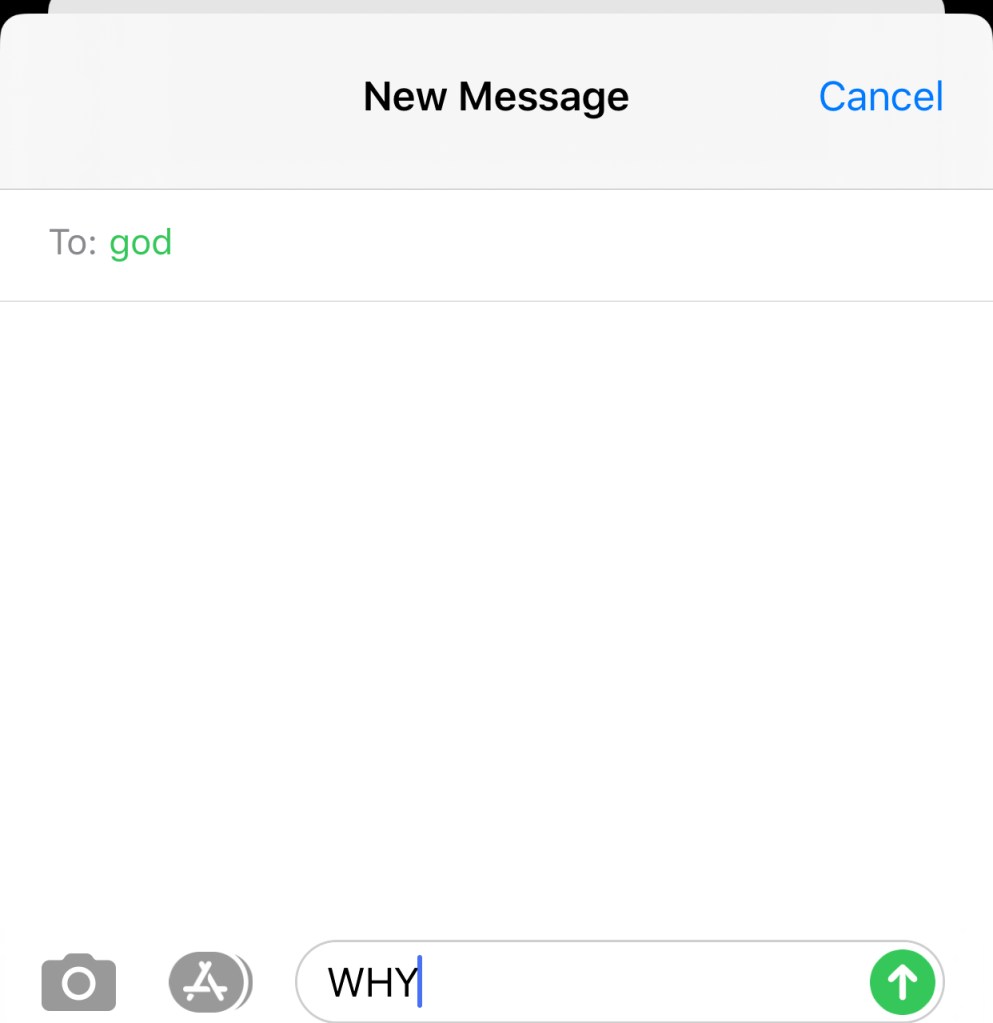
Why did God kill Nadav and Avihu? Why have so many people died from coronavirus? Why are we still being punished for drawing near to each other? How many of us, in the last month, have ignored that nagging voice inside – the one that dares to ask God why this happened? 

In Brachot 7a, the rabbis ask: “What does God pray?” Their answer? God prays, “May it be My will that My mercy may suppress My anger.” Even God is horrified when God’s wrath outweighs God’s mercy. Even God is devastated by corpses in refrigerator vans, hospitals overwhelmed, and by God’s own inability to heal all who need healing.

Our Yom Kippur Torah portion takes place immediately after Nadav and Avihu are killed. And sometimes, when we approach God on Yom Kippur, I follow the lead of theologian, David Blumenthal, and I imagine that God asks for our forgiveness too. For those moments when God’s mercy did not outweigh God’s wrath. For Nadav and Avihu. For asking Abraham to sacrifice his son. For asking us to sacrifice our healthcare professionals, grocery store employees, and others who are deemed “essential.” It’s a day for God to join us in grieving and atoning.

“For the wrong I have done before you
by allowing my wrath to consume me,” God prays.

“And for the wrong I have done before you
by allowing my fire to consume the innocent.

For the wrong I have done before you
by separating sacred and profane

And for the wrong I have done before you
because I should have known that everything is sacred.

Shema Yisrael, Listen, My children, My God-Strugglers,
Pardon Me, Forgive Me, Atone Me,” God weeps.

I am shema-ing, I am hearing You. And like Aaron, all I can muster for now is silence. But dear God, Moses was beside Aaron in Aaron’s silence, and we will be in this silence together. God, You heard Hannah’s whispered prayer, and we will hear each other across the distance. We learned to separate Shabbat from the rest of the week, and now we separate from one another, not because any one of us is profane, but because every soul is sacred. When we are safe again, we will join hands, as well as voices. We will stay in the struggle with You, God. And we will sing. 

Alone Together: Parshat Vayikra

How can we draw near in a moment when we are so far away from each other? In this week’s parsha, God shared a list of sacrifices for the Israelites to bring to the Mishkan, the holy sanctuary. Two weeks ago, when many of us began the quarantine, the Israelites built and worshiped a golden calf. Moses was up on Mt. Sinai, and they didn’t know when – or if – he was going to come back. In their fear, they built an idol they could touch, something they could connect with, physically. Something they thought they could trust to be there. Now, two weeks later, the Israelites have built a Mishkan instead. They were finally ready to sacrifice, ready to connect with the God they could not touch. The word for sacrifice in Hebrew is “Korban,” which means “to draw near.” They Israelites drew near to the God Who could not be seen, but could be deeply felt.

In the last two weeks, we, too, have been building sanctuaries. Sanctuaries in our homes, sanctuaries online, sanctuaries with our voices raised in song and prayer. We have been alone, afraid, and uncertain. We cannot reach out to touch one another. But we, too, have drawn near in ways that can be be felt.

One of my teachers, Reb Eli Cohen, pointed out that one of the names for God is HaMakom, which means The Place. Maybe while we have been sheltering-in-place, we have also been sheltering-in-The Place, embraced by the nurturing Source that holds us all. In our evening liturgy, we sing Ufros Aleinu Sukkat Shlomecha – asking God to spread over us a shelter of peace. Throughout these last two weeks, I’ve envisioned the lights from our screens, shining in our hands and on our desks all over the world. We cannot touch, but we have found ways to draw near to each other, to create sanctuaries, and to face our fears, embracing the Oneness that connects us all.

Shabbat Shalom, l’kulam. May it be a Shabbat of peace, wholeness, and healing, as we who are far away from one another draw near in every way we can.